


Choosing the right bathroom tiles is one of the most important decisions when designing or renovating a bathroom and it is often where many homeowners feel uncertain. The options are vast, from materials and finishes to colours, patterns and layouts. Knowing how to choose bathroom tiles is about finding the balance between style and practicality, while considering how the tiles will interact with the natural light, room size and the fixtures within your bathroom. In this guide, we will break down the key considerations and provide inspiration so that you can confidently choose the tiles that will transform your bathroom into a space that is both beautiful and practical.
Key Considerations When Choosing Bathroom Tiles
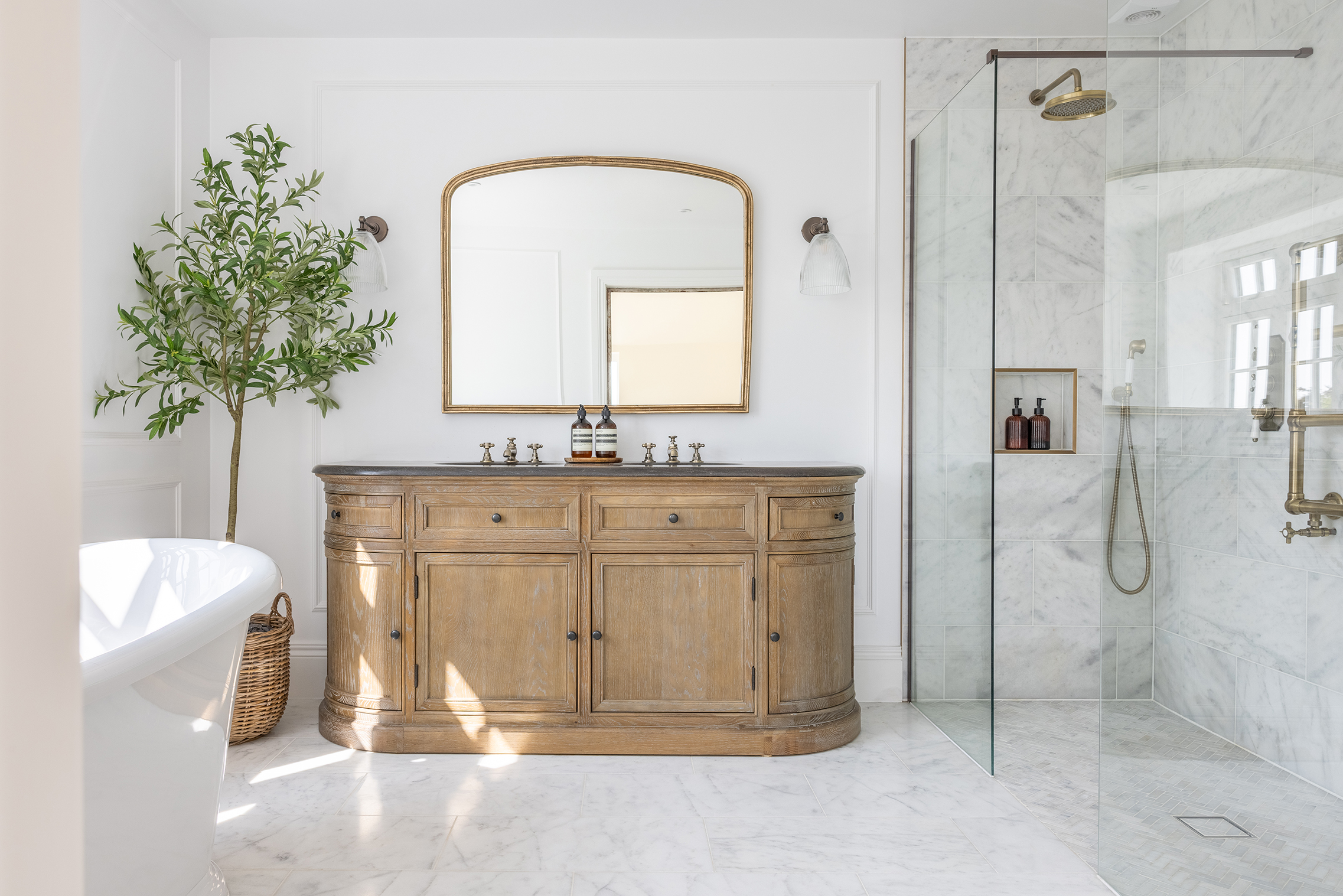
Before browsing or placing an order, it is worth taking a moment to think about which tiles will work best in your bathroom. Consider the size of the space, the level of natural light available and how the room will be used day to day. Smaller bathrooms often benefit from lighter shades and larger format tiles, which help create a sense space, while darker or richer tones can work beautifully in larger spaces to add depth and warmth. Practicality is equally important. Areas exposed to water, such as shower floors are best suited to moisture-resistant, non-slip tiles, while drier areas offer the opportunity to explore our range of wall tiles. Maintenance should also be considered, tiles that are easy-to-clean and water-resistant will help to keep your bathroom looking its best for years to come. For inspiration, explore our floor tiles collection and discover options that bring both durability and aesthetic.
Choosing the Right Bathroom Tile
The type of tile you choose for your bathroom will influence both the appearance and the durability of your space, so it’s worth understanding the characteristics. The most popular and practical choices for bathrooms are porcelain tiles and natural stone tiles, each offering their own benefits. Porcelain is a low maintenance and ideal for busy homes, while natural stone brings timeless character and texture to your bathroom.
Porcelain Bathroom Tiles
Porcelain tiles are one of the most versatile and practical options for bathrooms, thanks to their durability, water resistance, and low-maintenance properties. Advances in manufacturing mean porcelain tiles can now realistically replicate the look of natural materials, while offering the durability and water resistance required for bathroom areas.
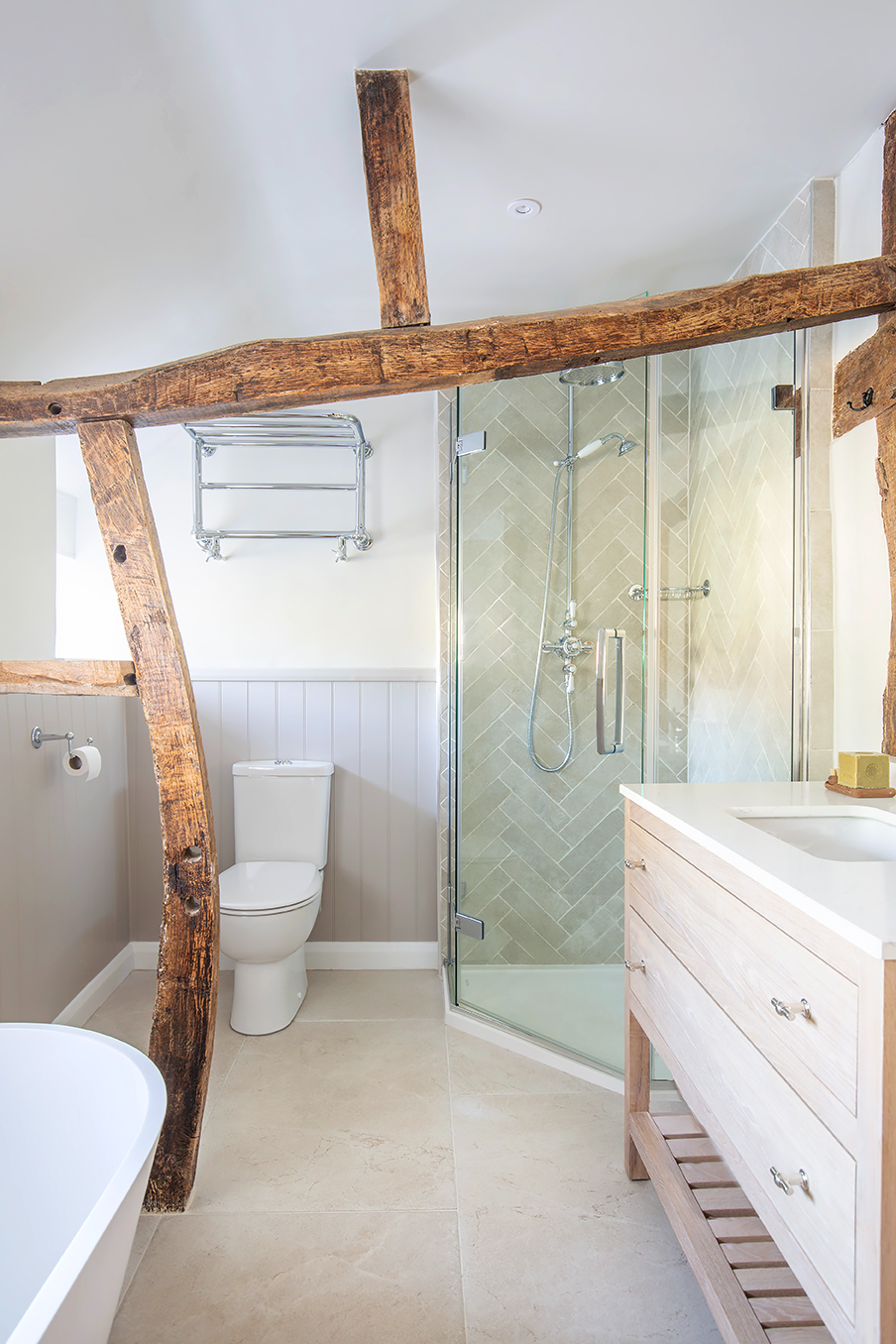
Stone effect tiles remain a popular alternative to real natural stone tiles, thanks to their realistic designs and easy maintenance. If you’re looking for a classic neutral tile, look no further than the Dorchester Aged White and Chastleton Ivory Stone Effect. Both capture the variation, texture and tonal depth of real stone while having non-porous qualities making it a perfect tile for bathroom floors and walls
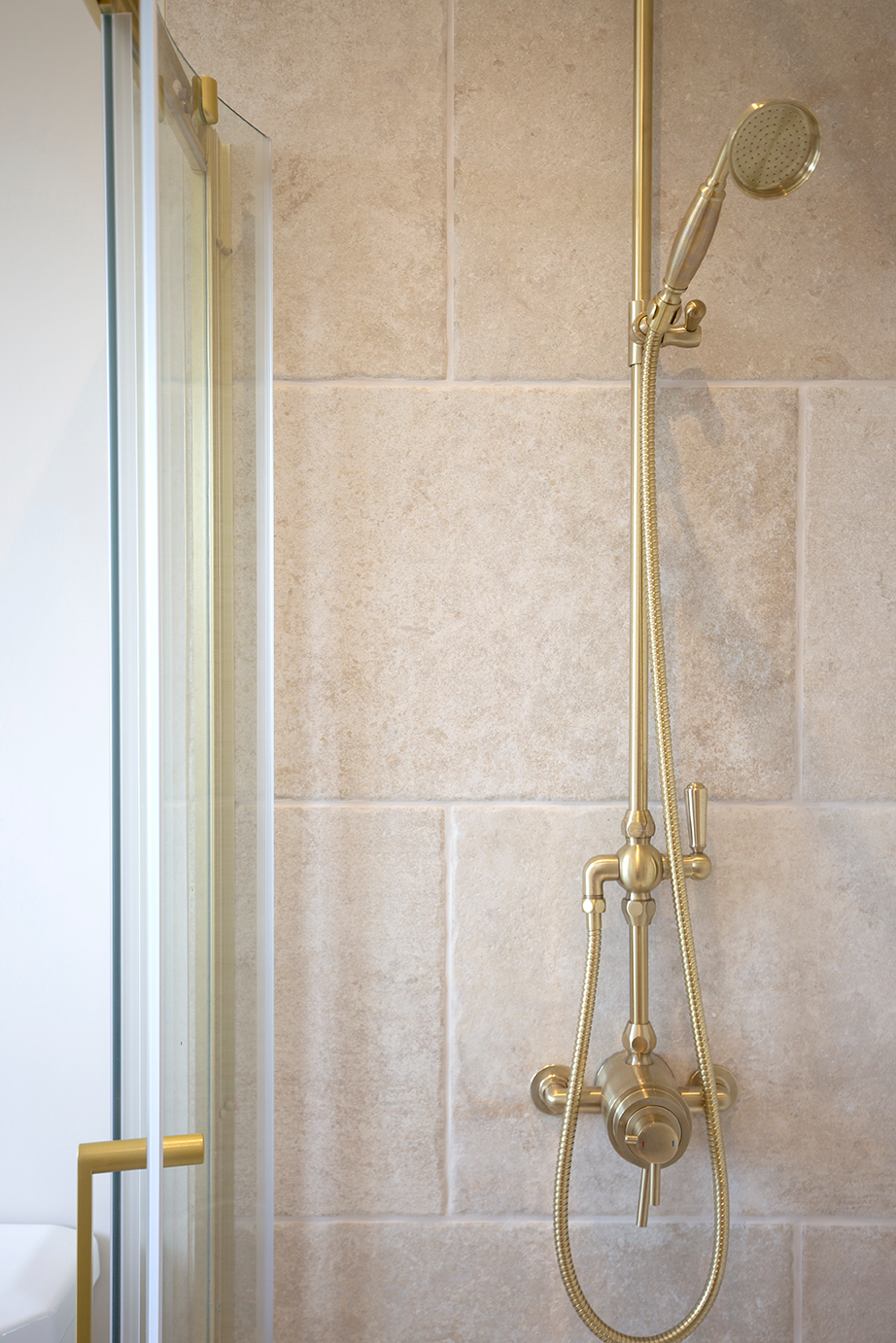
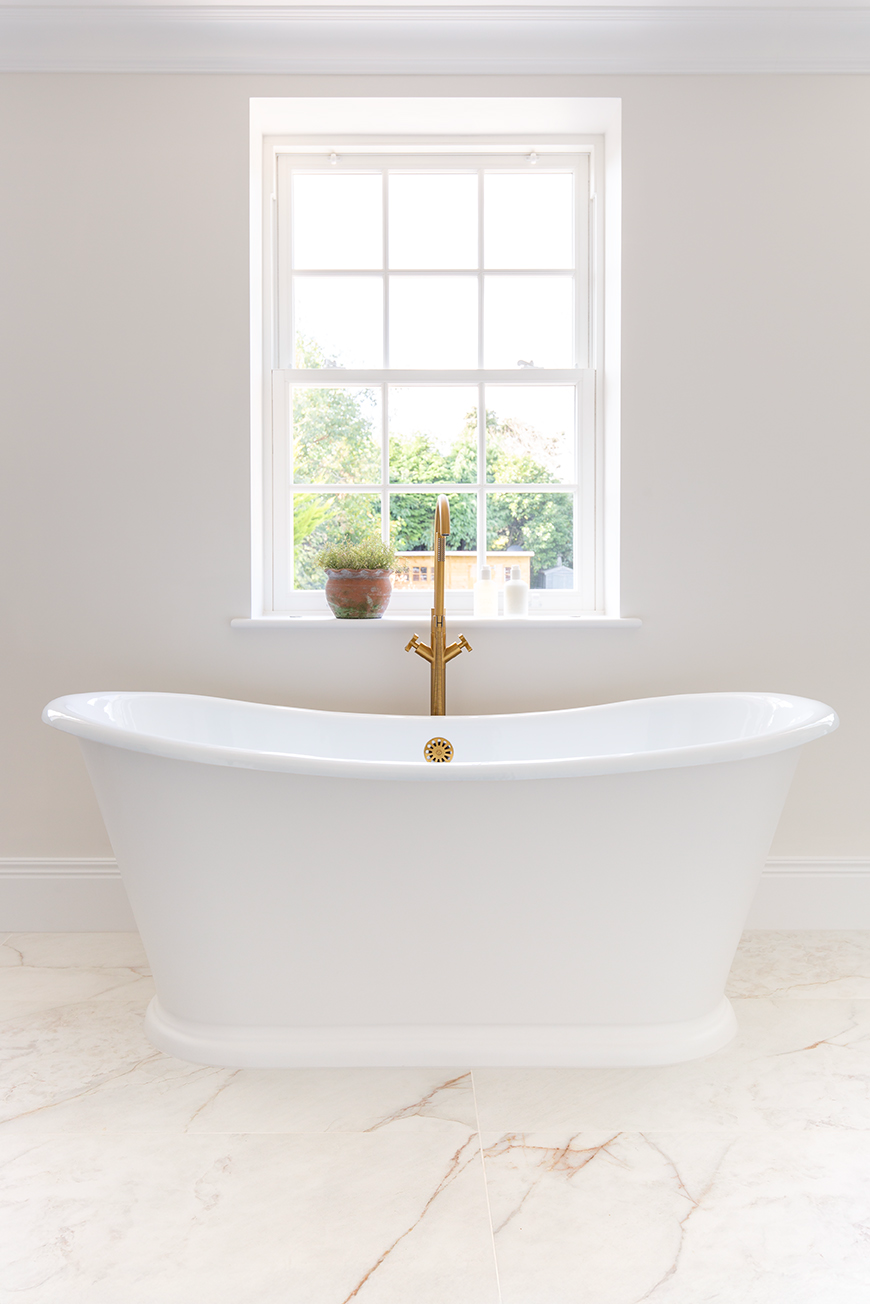
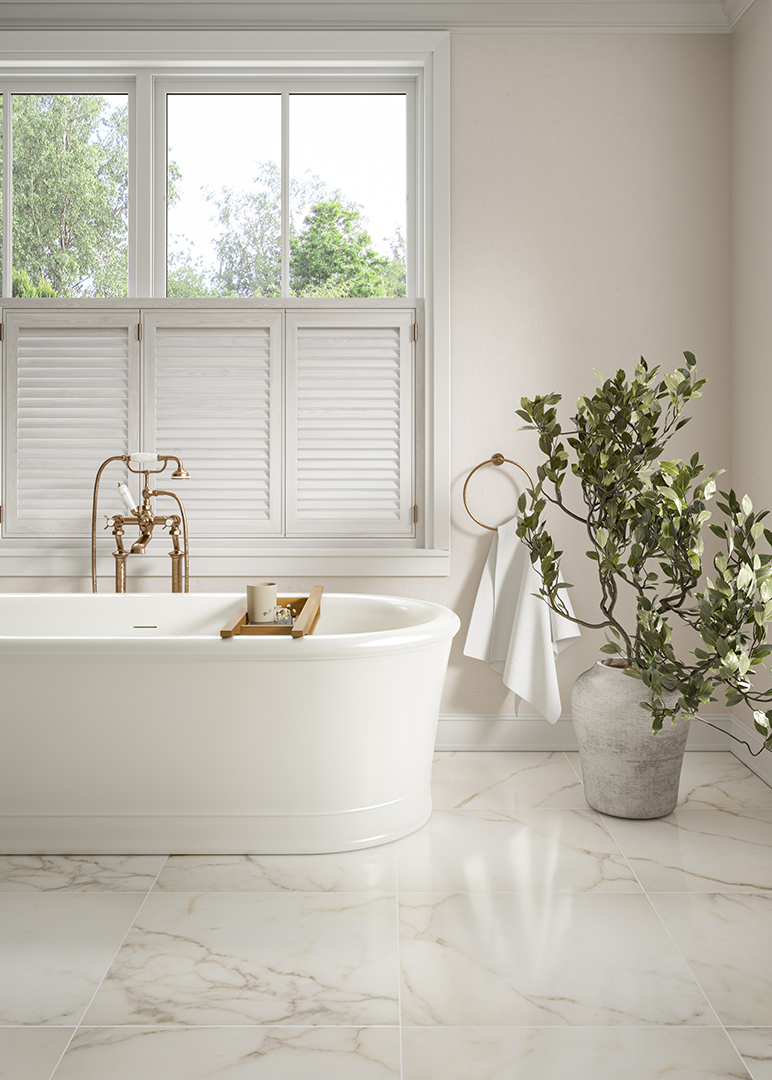
Marble effect tiles or faux marble tiles have been a popular alternative to real marble for a number of years, thanks to the realistic print, array of designs available and easy maintenance of marble effect porcelain. The Carrara Rosa Pink Marble Effect tiles offer a classic white marble effect tile replicating the look of Carrara marble with subtle blush pink veining. For a warmer toned white, the Ravello Borghini marble effect provides an ivory-cream based tile with soft veining
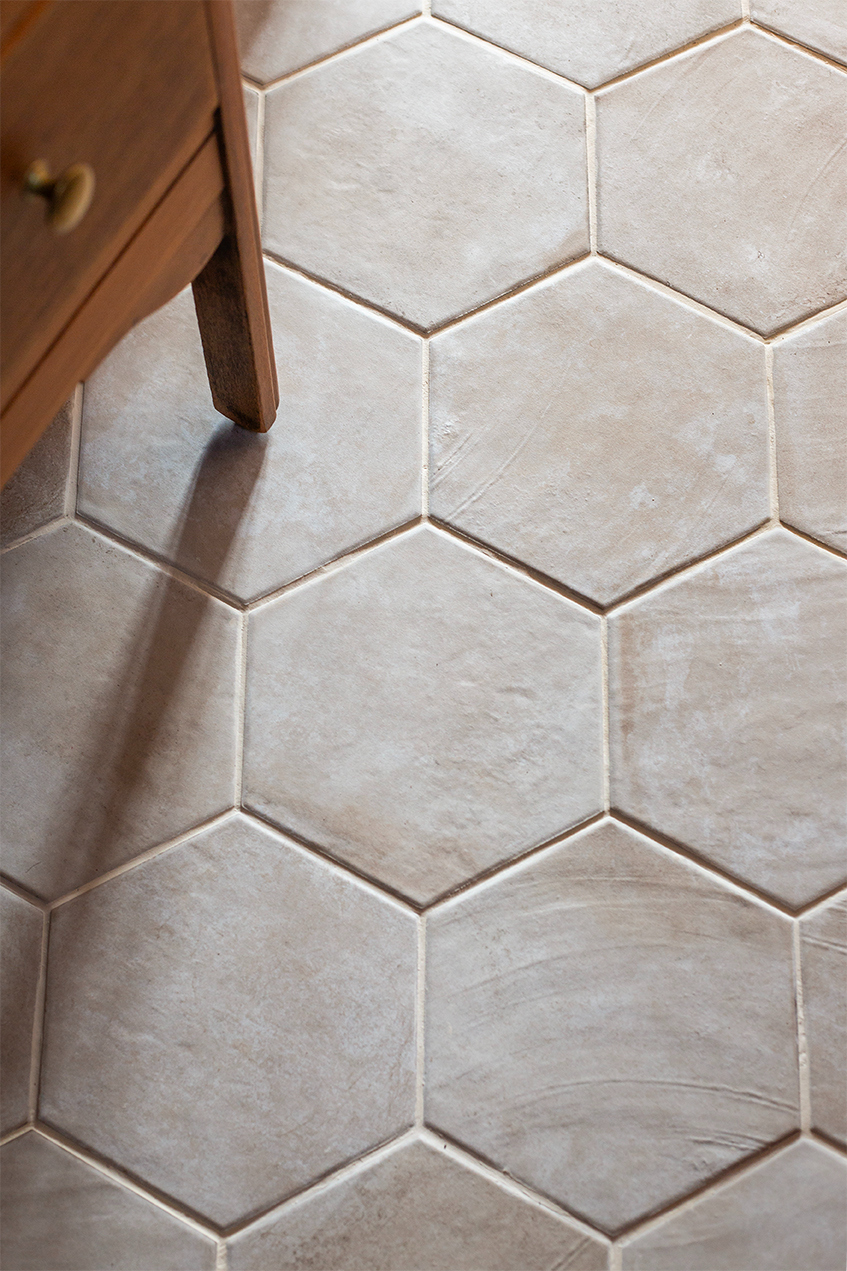
Elegant and understated, terracotta effect tiles offer a timeless charm emulating the traditional craftsmanship of terracotta. With soft tonal variation and a gently weathered surface, they give the texture of hand-formed clay while delivering the durability of porcelain. The Campello Bianco hexagon tiles and Campello Cotto Hexagon tiles both capture this look beautifully.

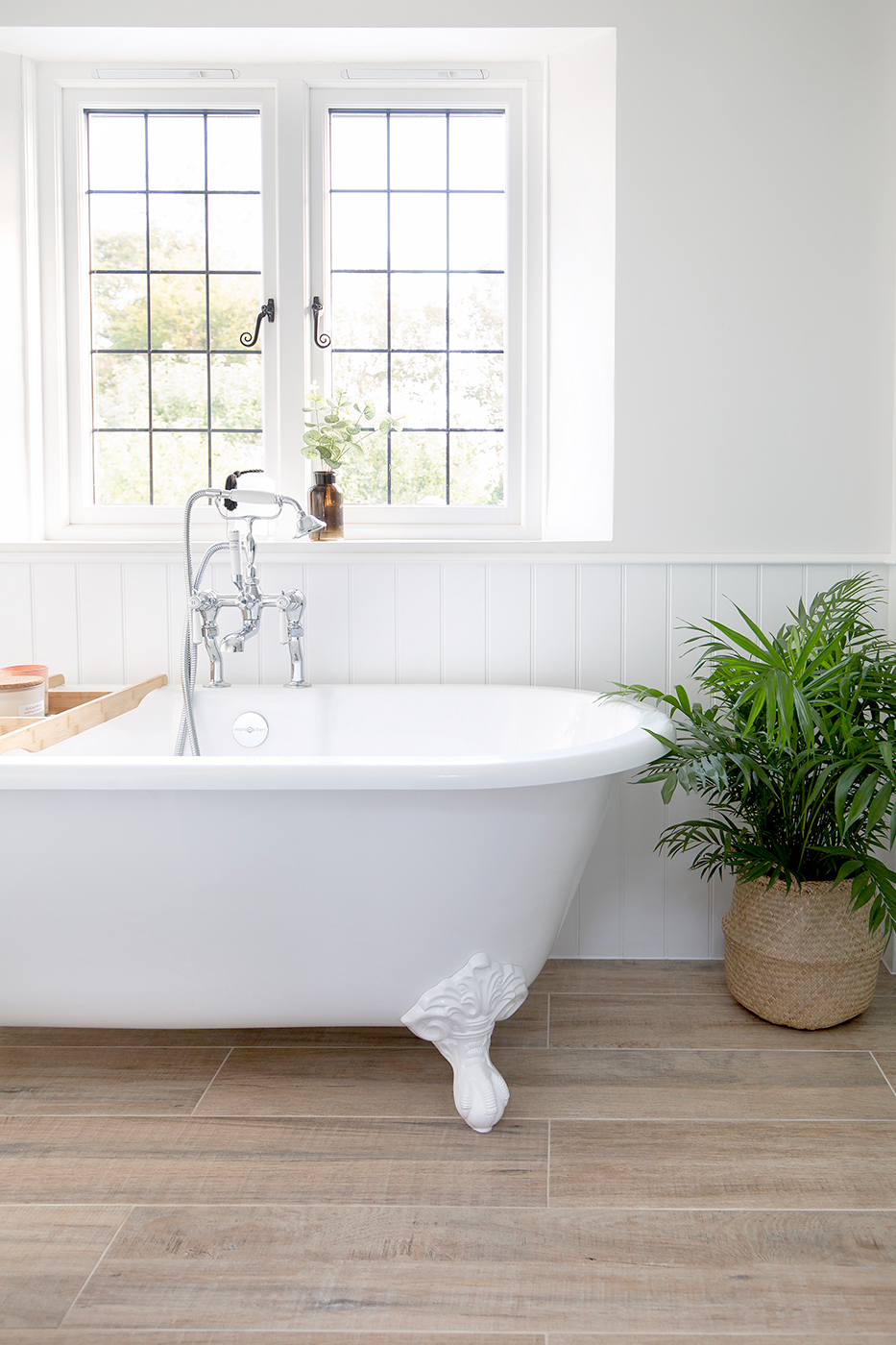
If you are wishing for the look of natural wood but want the durability and practicality of porcelain, then wood effect tiles are an ideal choice. From rustic oak textures to sleek wood effect planks there is a style to suit every bathroom. The Chatsworth Tudor Oak effect porcelain is a standout choice for bathroom floors, offering the warmth of timber with the water resistance needed for everyday use. Another wonderful wood effect bathroom tile is the Henbury Natural Oak Porcelain, which offers warm tones and an intricate texture and pattern. Its forgiving surface makes it ideal for busy everyday homes.
Natural Stone Bathroom Tiles
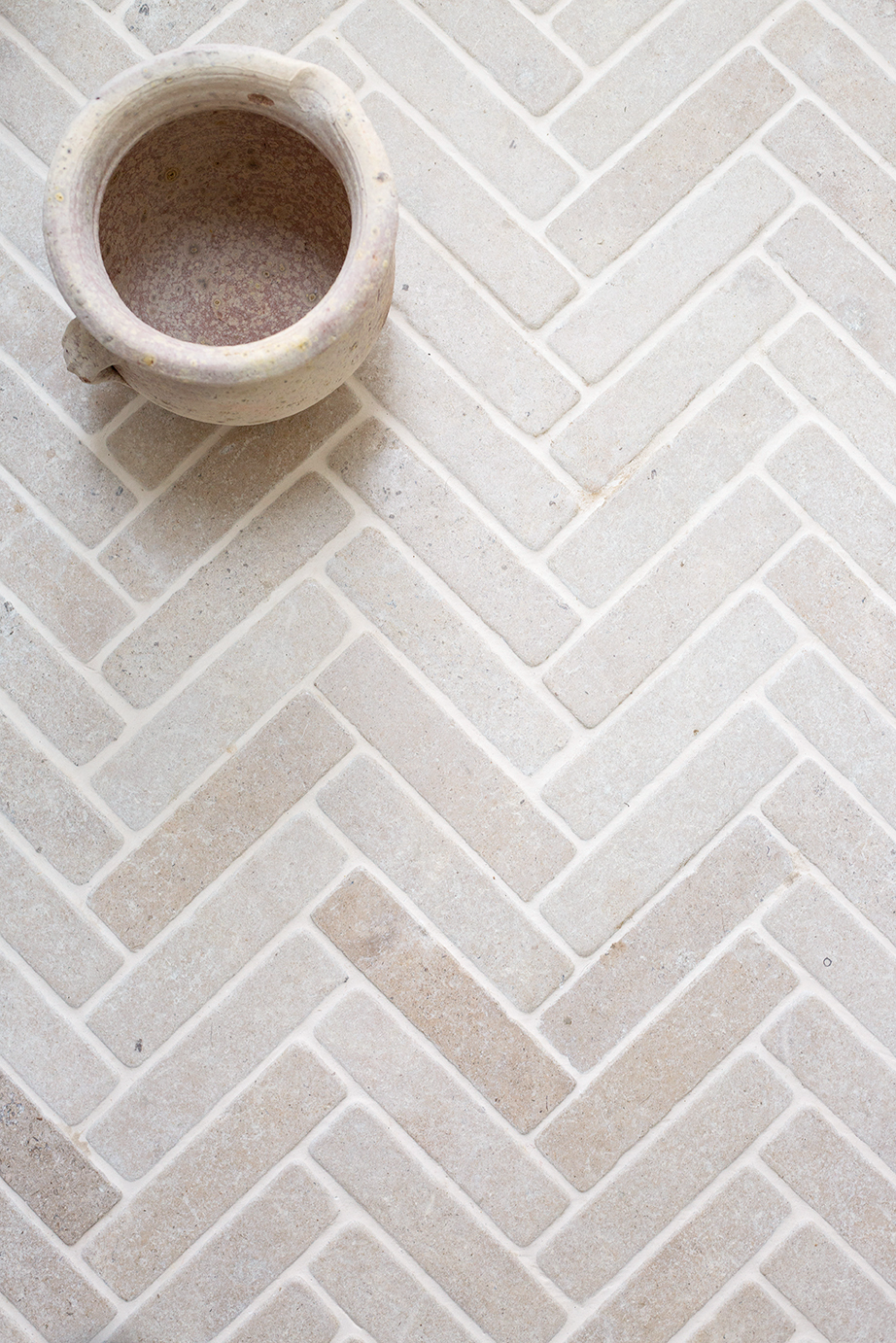
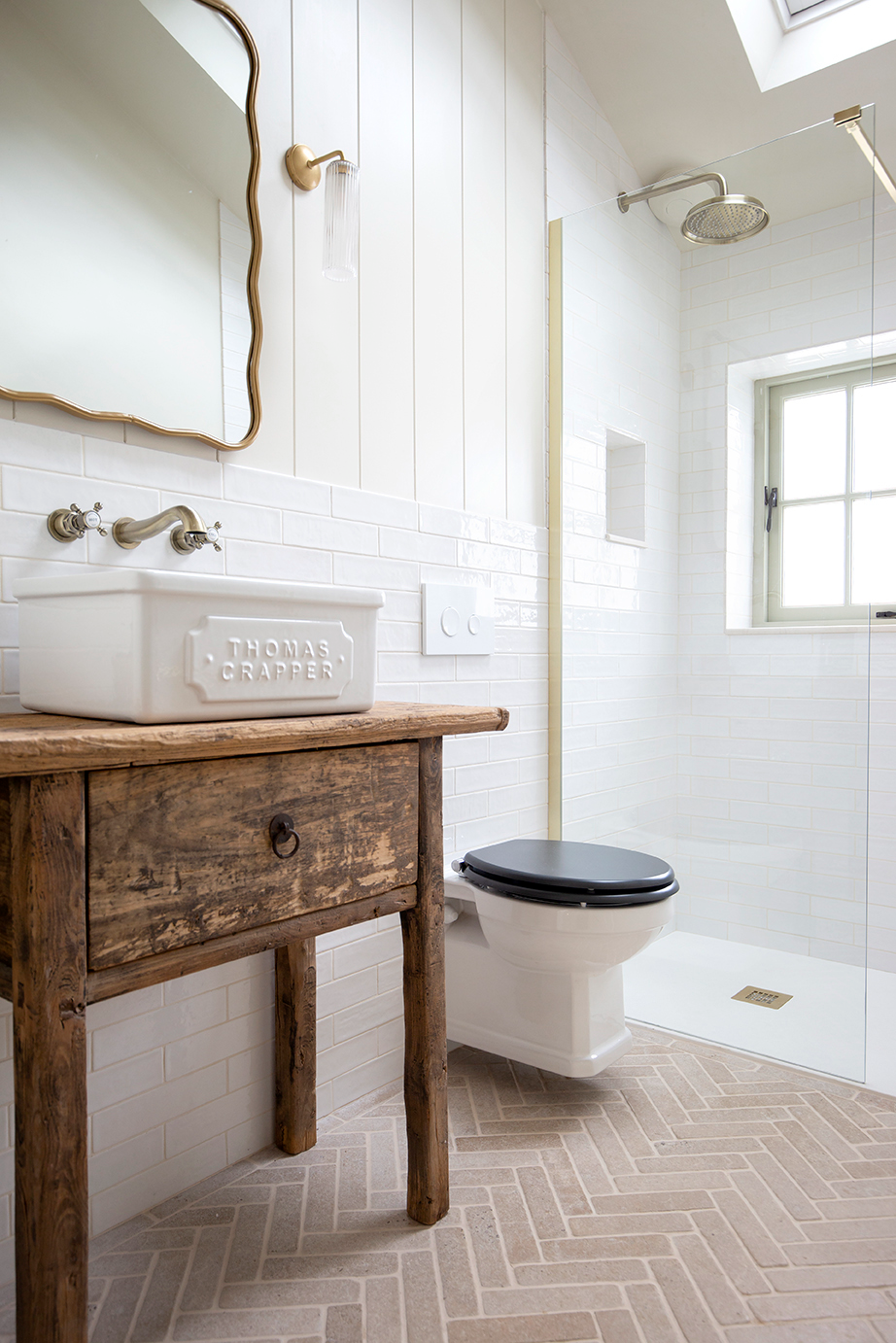
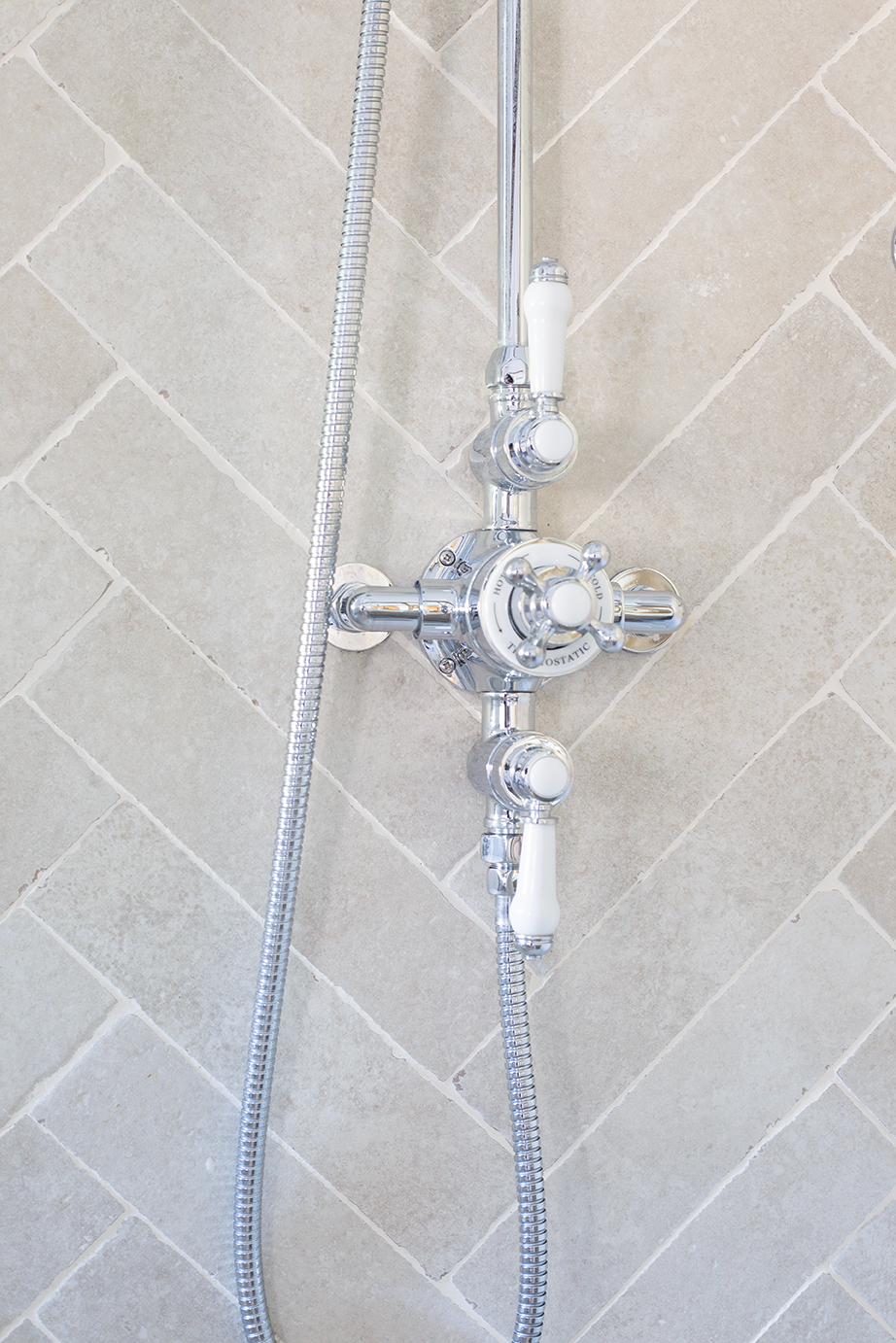
The Tuscany tumbled herringbone brick are a textured honey toned natural stone, featuring subtle variation as well as rich fossilisation resulting in a characterful and forgiving limestone tile. These slim brick tiles laid in herringbone pattern to help give the illusion of space and add a decorative feel whilst keeping with neutral shades.
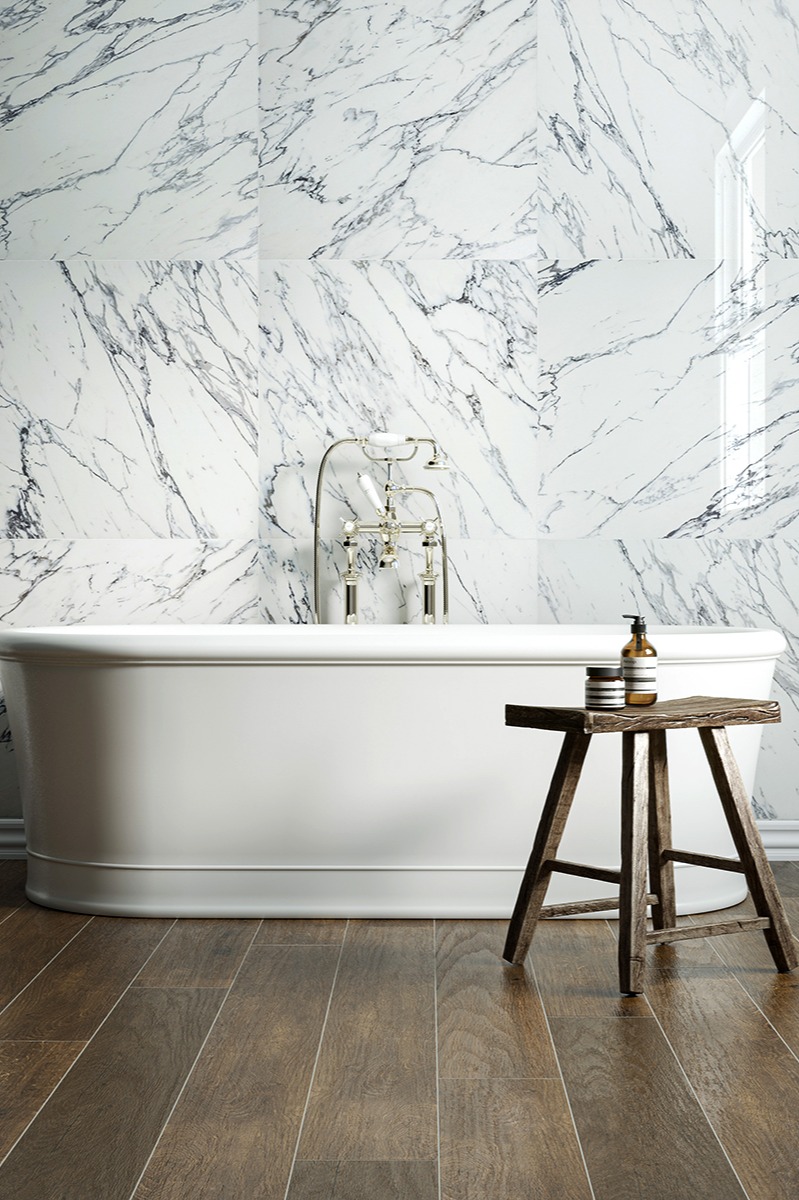
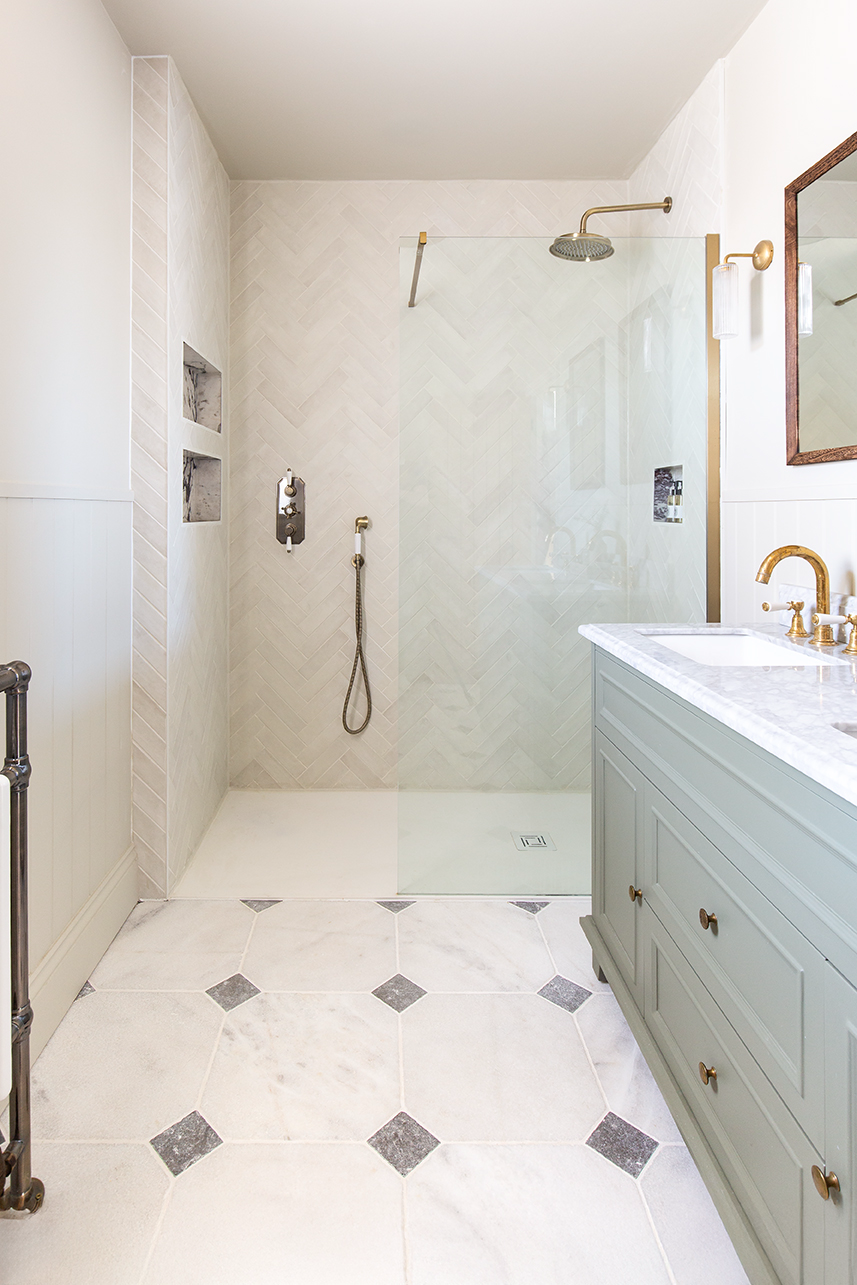
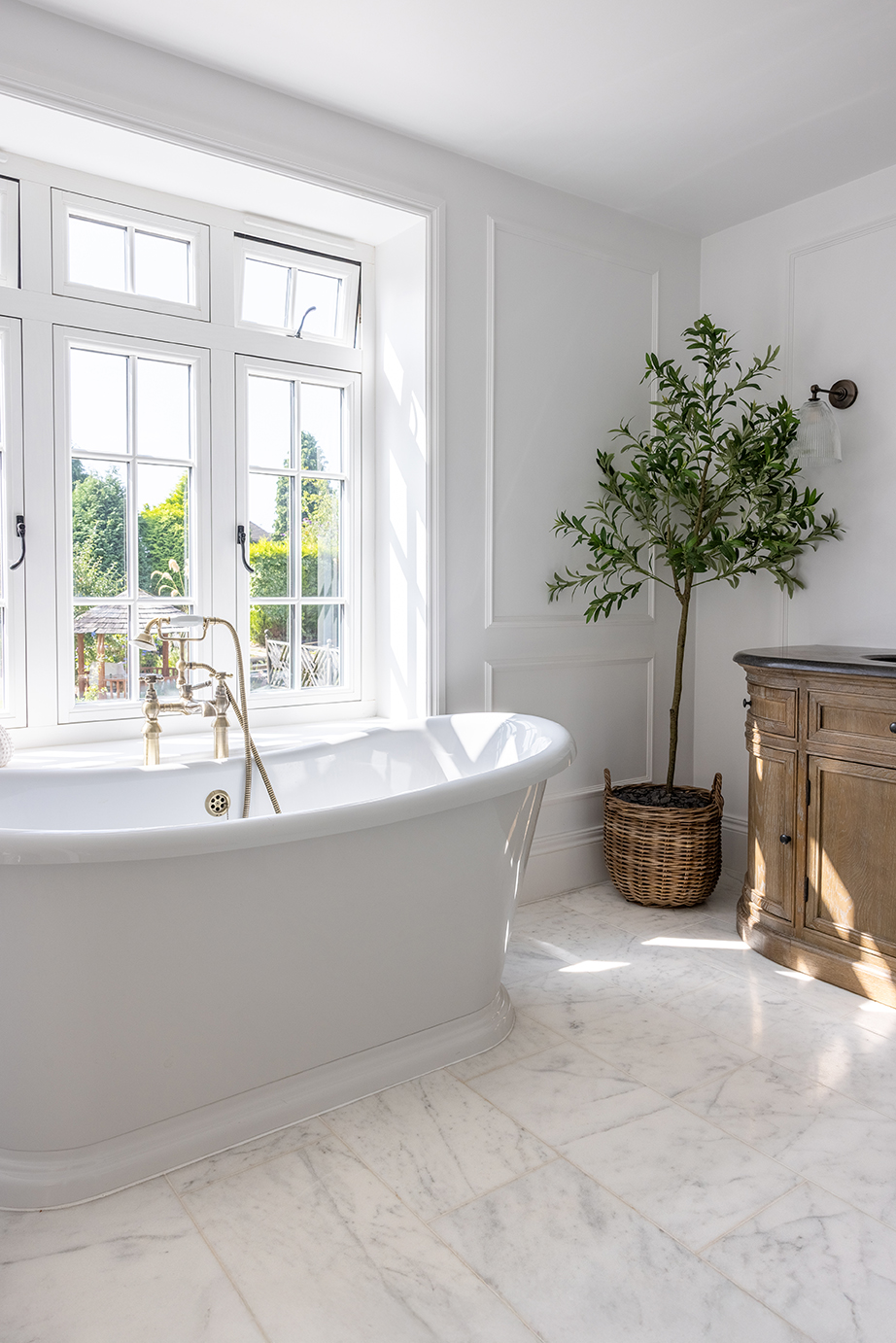
Marble tiles have been used for centuries, gracing bathrooms and hallways alike. Known for being a dense and hardwearing material, marble is a natural stone available in a variety of colours with unique patterning and details. Whether it is a classic white marble like the Carrara Bianco Marble or the subtly patterned Parisian Manoir Cabochon, marble tiles are sure to elevate any bathroom scheme, adding a timeless elegance.
Bathroom Tile Patterns
The size and layout of your tiles can impact the perception of space and your overall aesthetic. Small tiles can be used to create intricate patterns or a detailed feature wall, while large format tiles are ideal for creating a seamless, expansive look. Patterns such as herringbone, chequerboard, or stripes provide character without overwhelming the space.
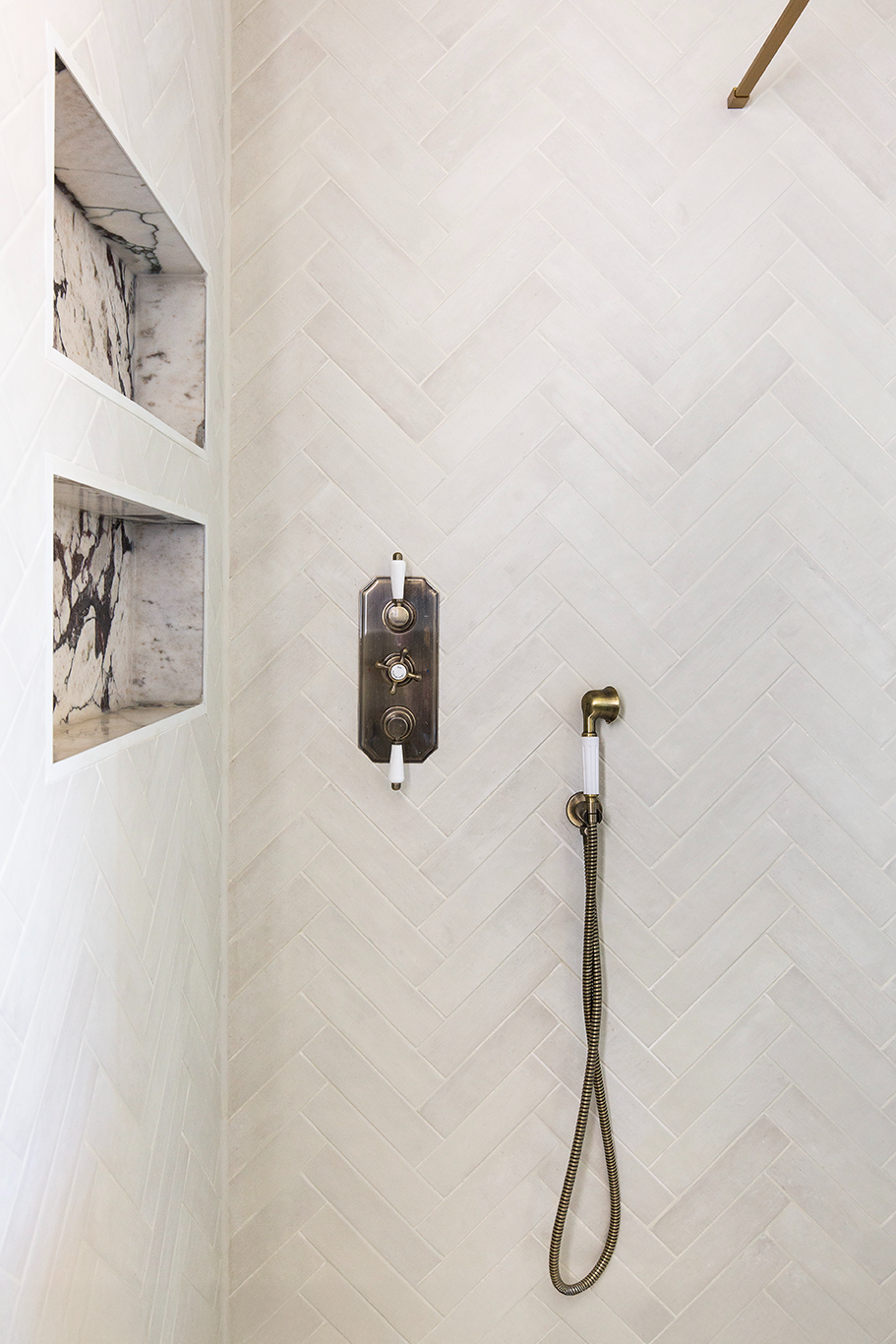
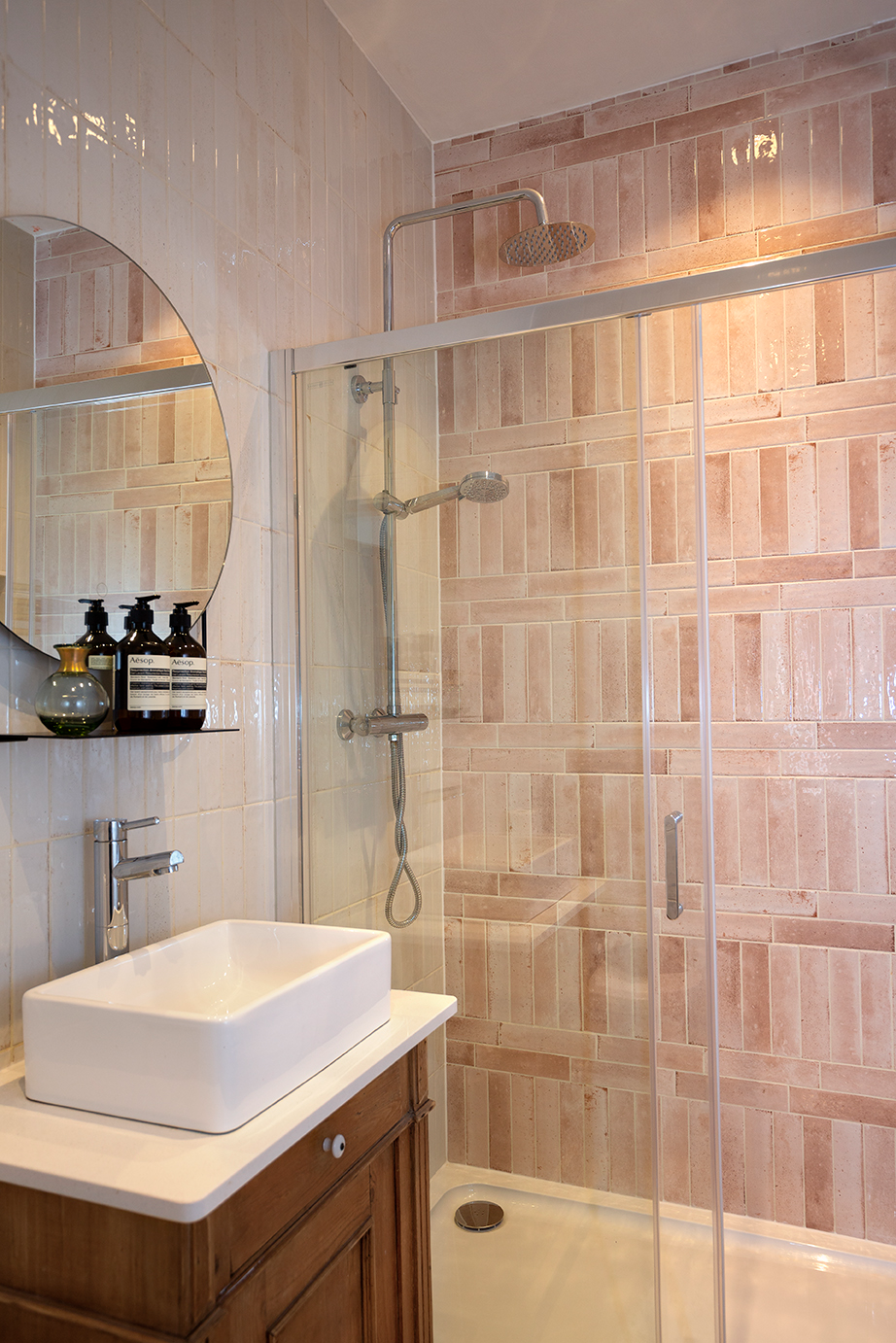
Herringbone tiles are particularly effective with metro tiles where the pattern can become a feature without overwhelming the room and add a decorative touch. A herringbone tile look is achieved by installing the tiles at a 45 degree angle. so long as the width of the tile is half or less of the length of the tile. A few favourite herringbone metro tiles are the Pottery Chalk metro tiles in a matt finish, or Alnwick Ivory brick tiles in distressed finish. Both providing a neutral shade that will complement a range of bathroom interiors.
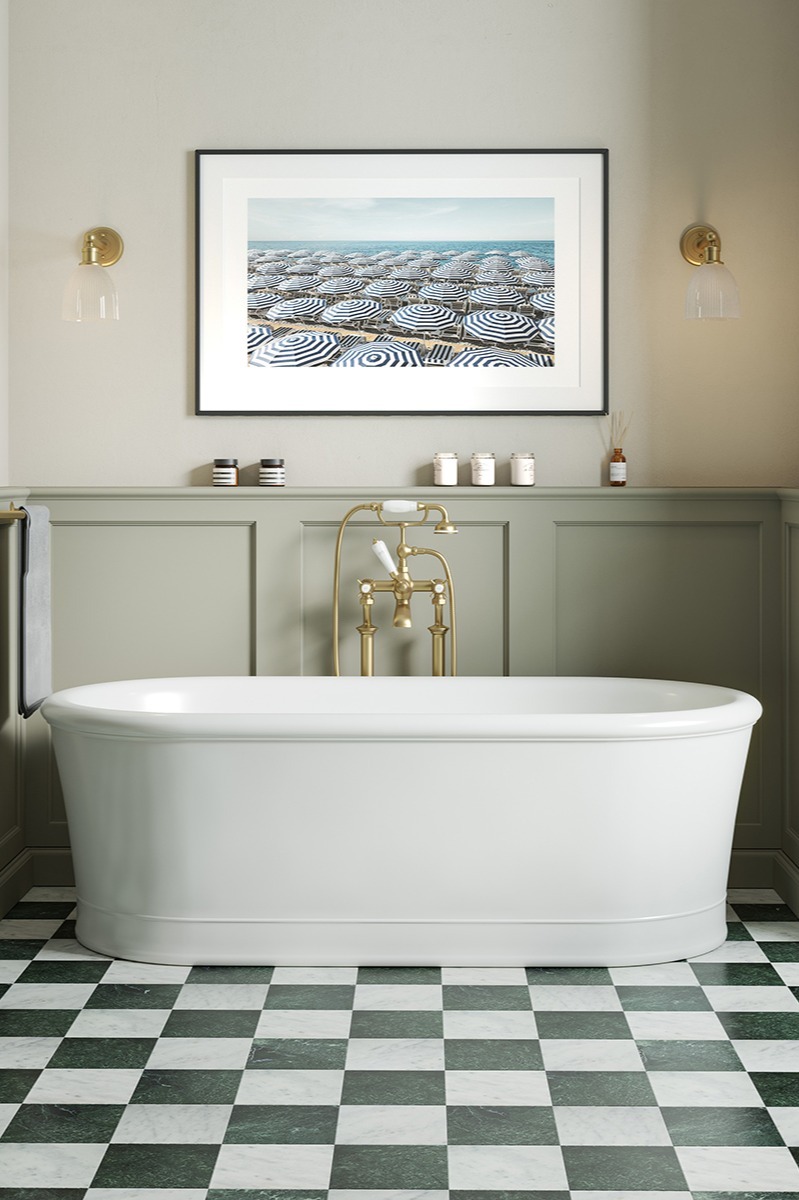
Chequerboard tiles have stood the test of time, offering a timeless appeal that never truly goes out of style. The unique Riviera Emerald and White marble with contrasting square tiles, brings a sense of rich sophistication as marble bathroom flooring. For those looking to make a monochrome statement, opt for the Julietta Black & White with its matt base and gloss black inserts. Made from durable porcelain, these tiles are a practical choice and require lower maintenance, while still retaining their charm.

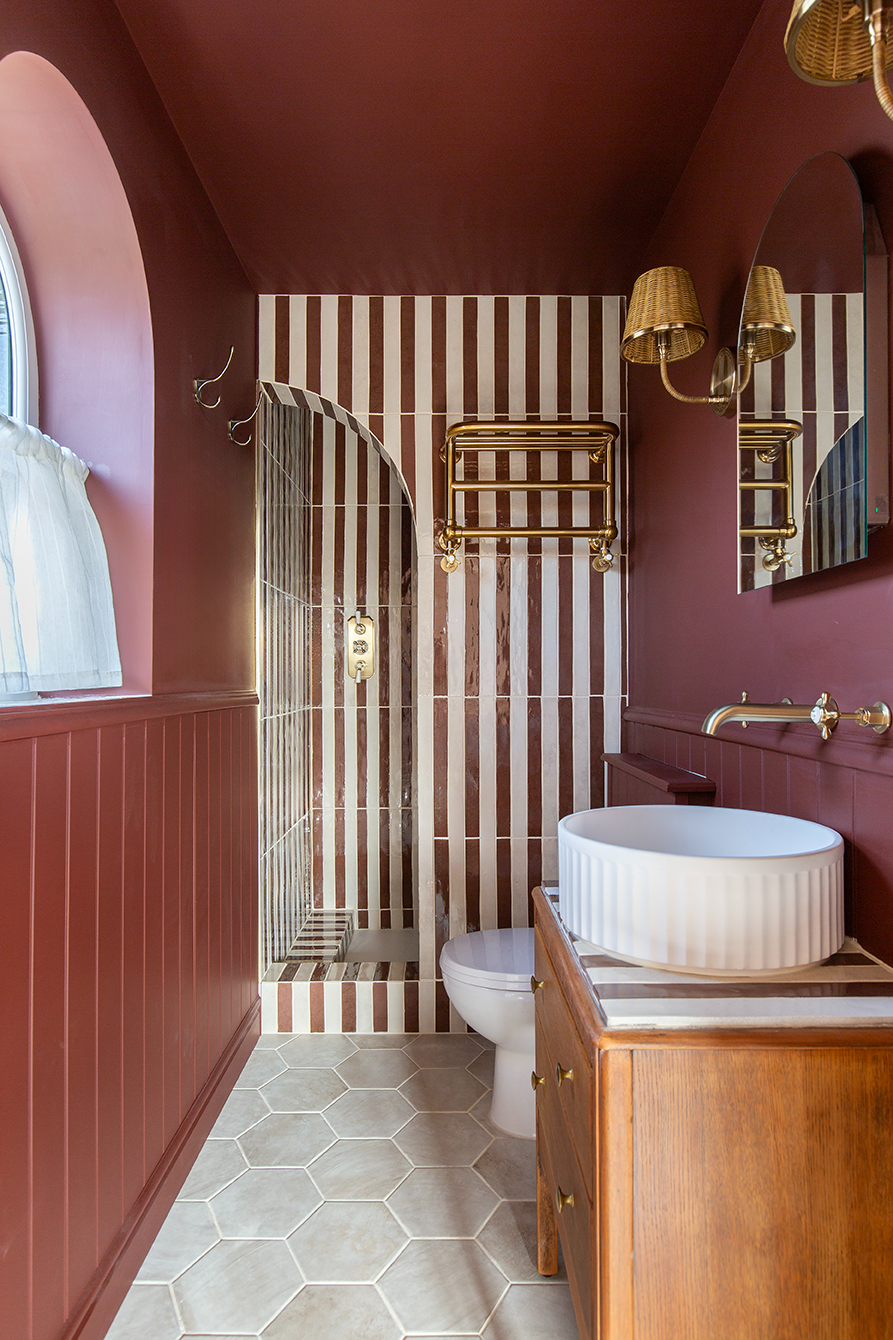
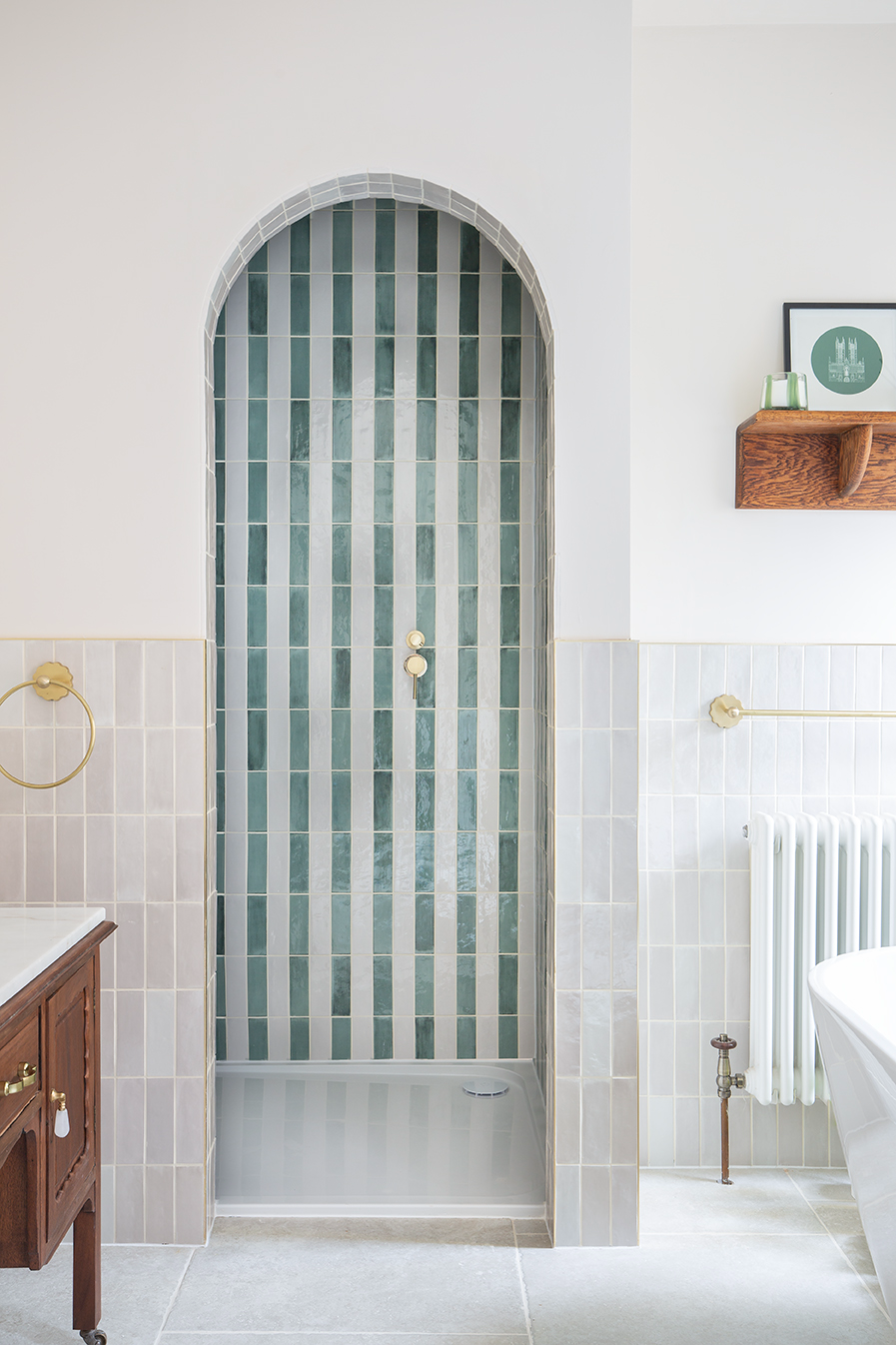
Striped tiles continue to be a popular option to effortlessly add interest and visual movement to both walls and floors. The versatility of our Luella range lets you play with bold contrasting colours for an impactful statement or opt for calming hues of green for a more subtle, sophisticated look with our Pastello range. With endless design possibilities, they are particularly effective in smaller bathrooms, to help create the appearance of elongated walls and a spacious bathroom.
Colour of Bathroom Tiles
Selecting the right colour palette for your bathroom is essential to creating the perfect mood and atmosphere you wish for. Neutral tones including soft beiges, greys and whites provide a timeless and versatile back drop. Pastel shades, such as soft pinks or greens, can introduce a gentle touch of personality without overwhelming the room. When introducing bold, deep hues it can make certain walls or floors a focal point.
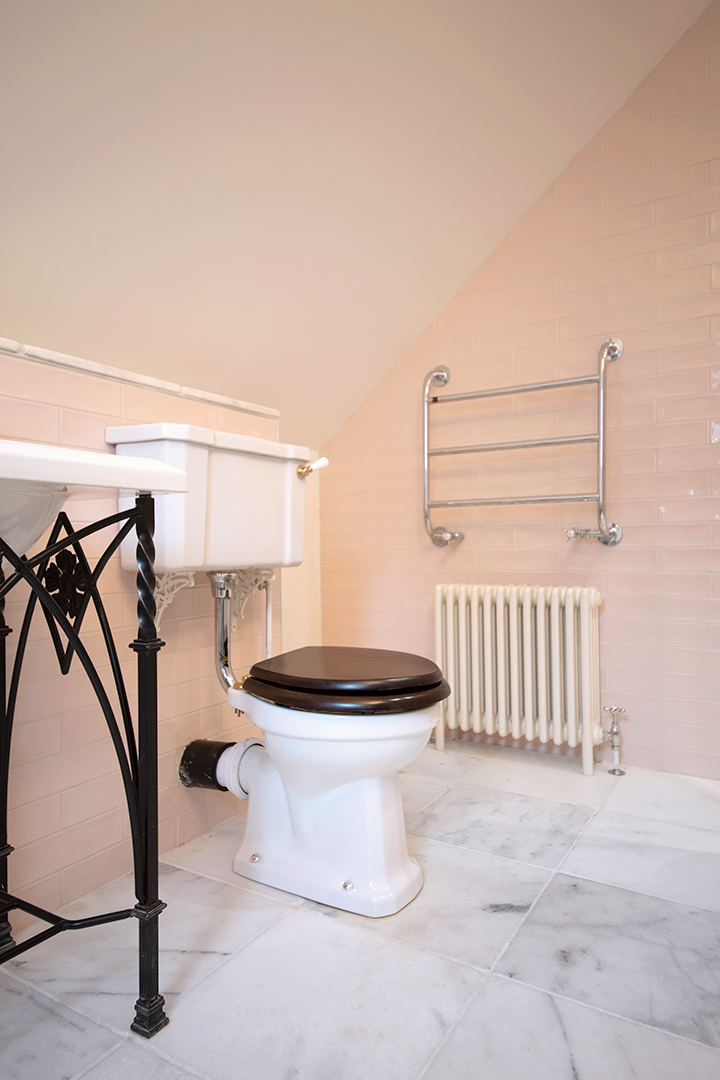
Pink has been a popular choice for those courageous enough to embrace brighter hues, pink tiles can bring both charm and character to a bathroom scheme. Our first option would be the Primrose Blush Metro, loved for its glossy finish and beautifully consistent tone from tile to tile. Ideal for creating an all-pink palette. For those who prefer more variation and texture, the Hockley Antiqued Rose offers a softer, more detailed finish. With gentle tonal movement and an aged aesthetic, it is a wonderful option for a shower space.
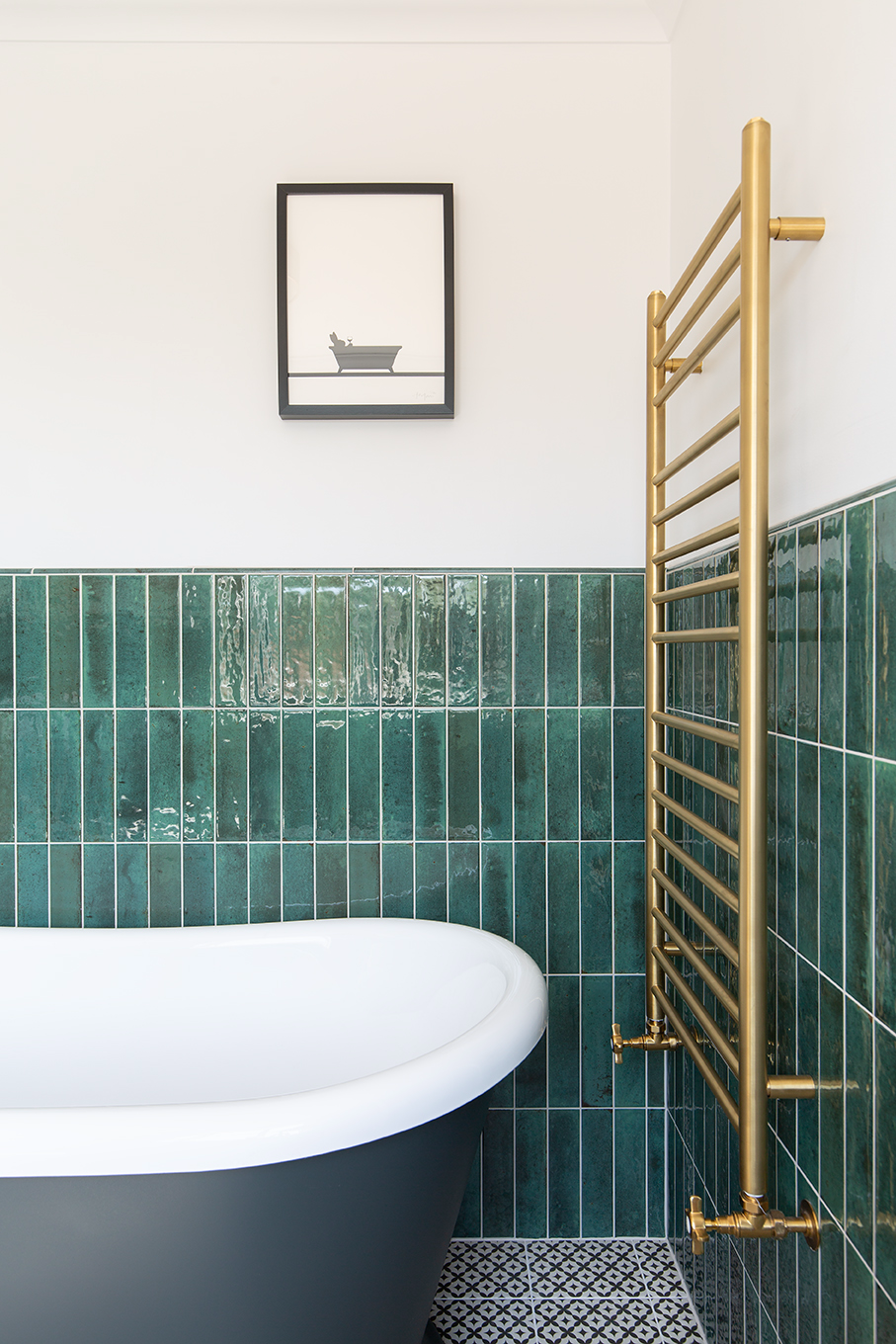
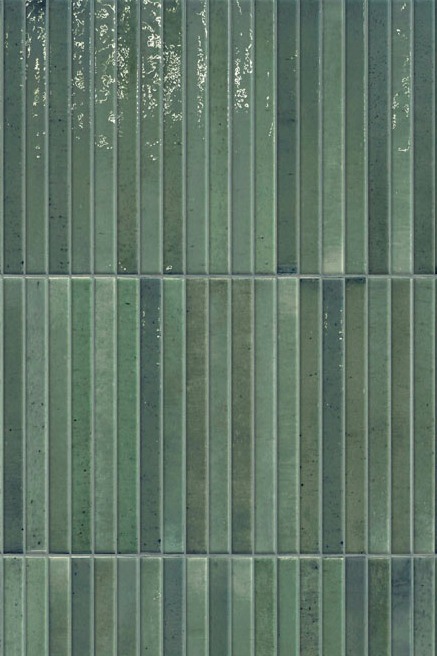
For a richer green hue, the Hockley Antiqued Green Metro offers an artisanal, handmade feel in a classic metro format that works beautifully laid in herringbone. The Nori Forest tiles provide a rich colour in this popular kit kat tile format working wonderfully as a feature wall.
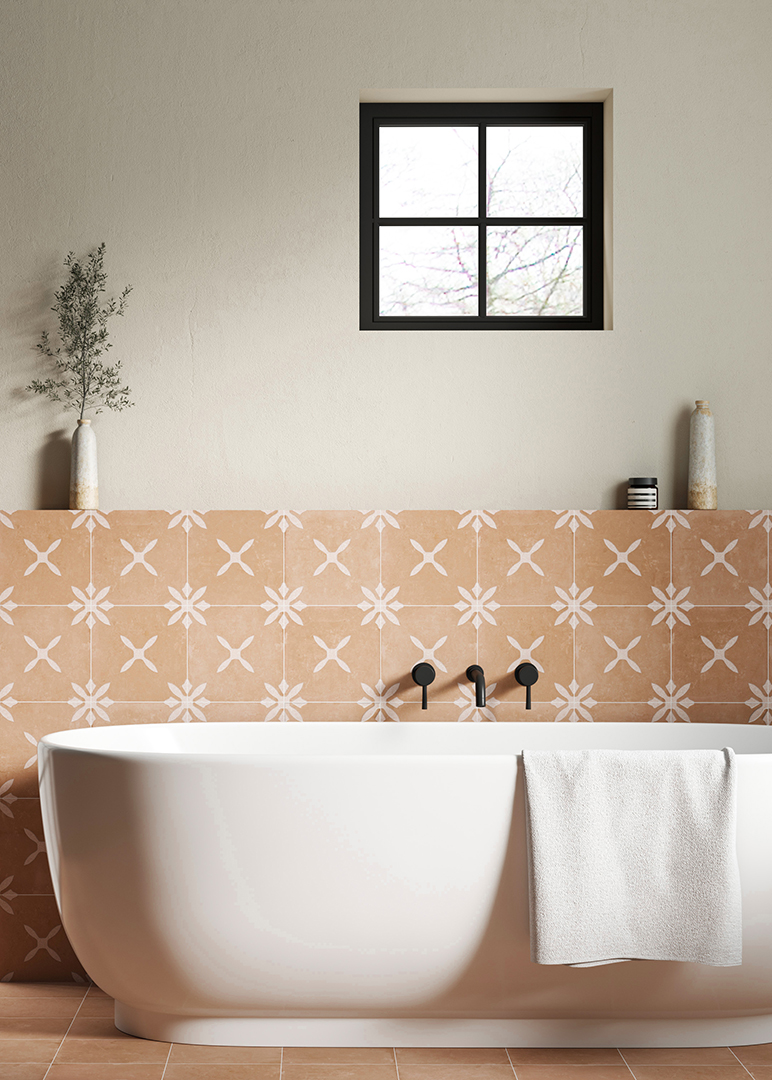
Earthy-toned tiles bring warmth, texture, and an elegant feel to contemporary bathroom spaces. The Salamanca Cotto Decor combines a warm terracotta base with delicate gloss white inserts, creating a refined pattern that works wonderfully on floors. The Oliva Marron Hexagon is a terracotta-effect tile with rich tones, these earthy shades add depth and character. They both offer a tactile look, perfect for bathrooms where natural inspiration and contemporary style meet.
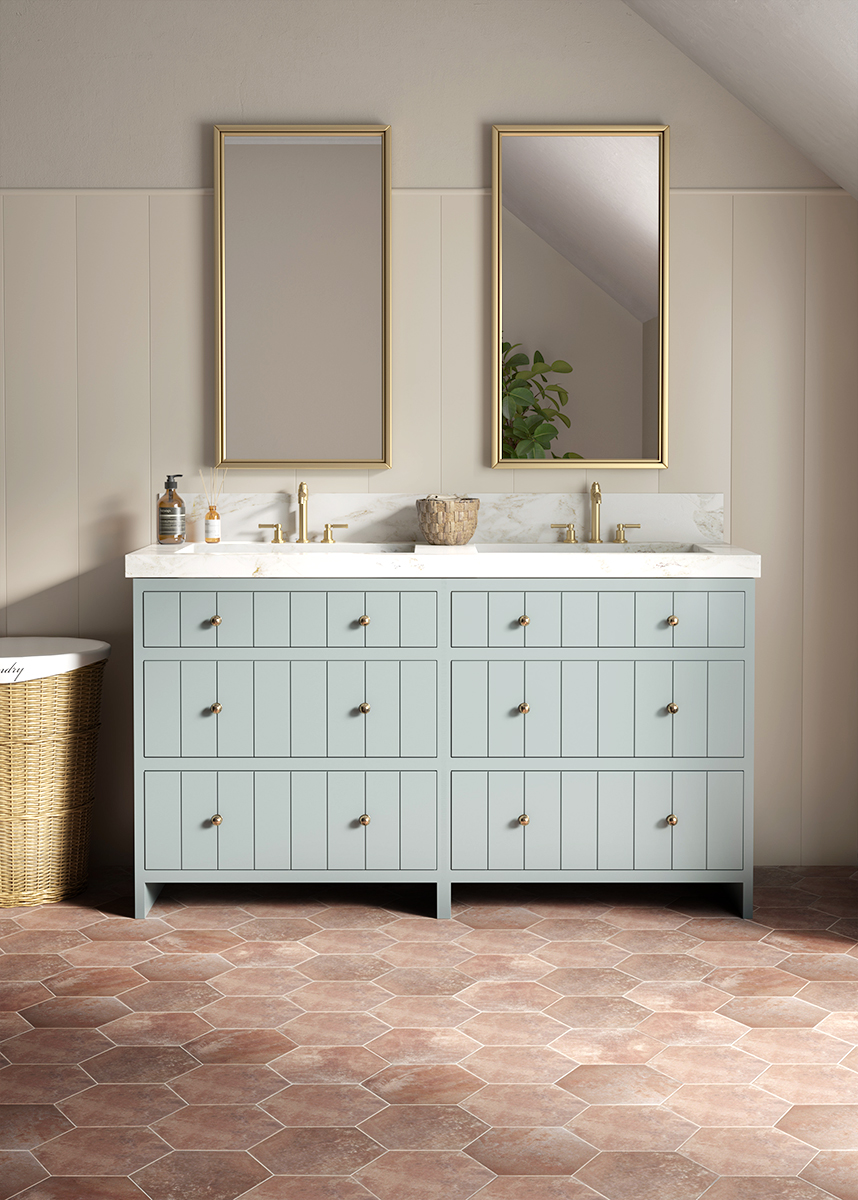
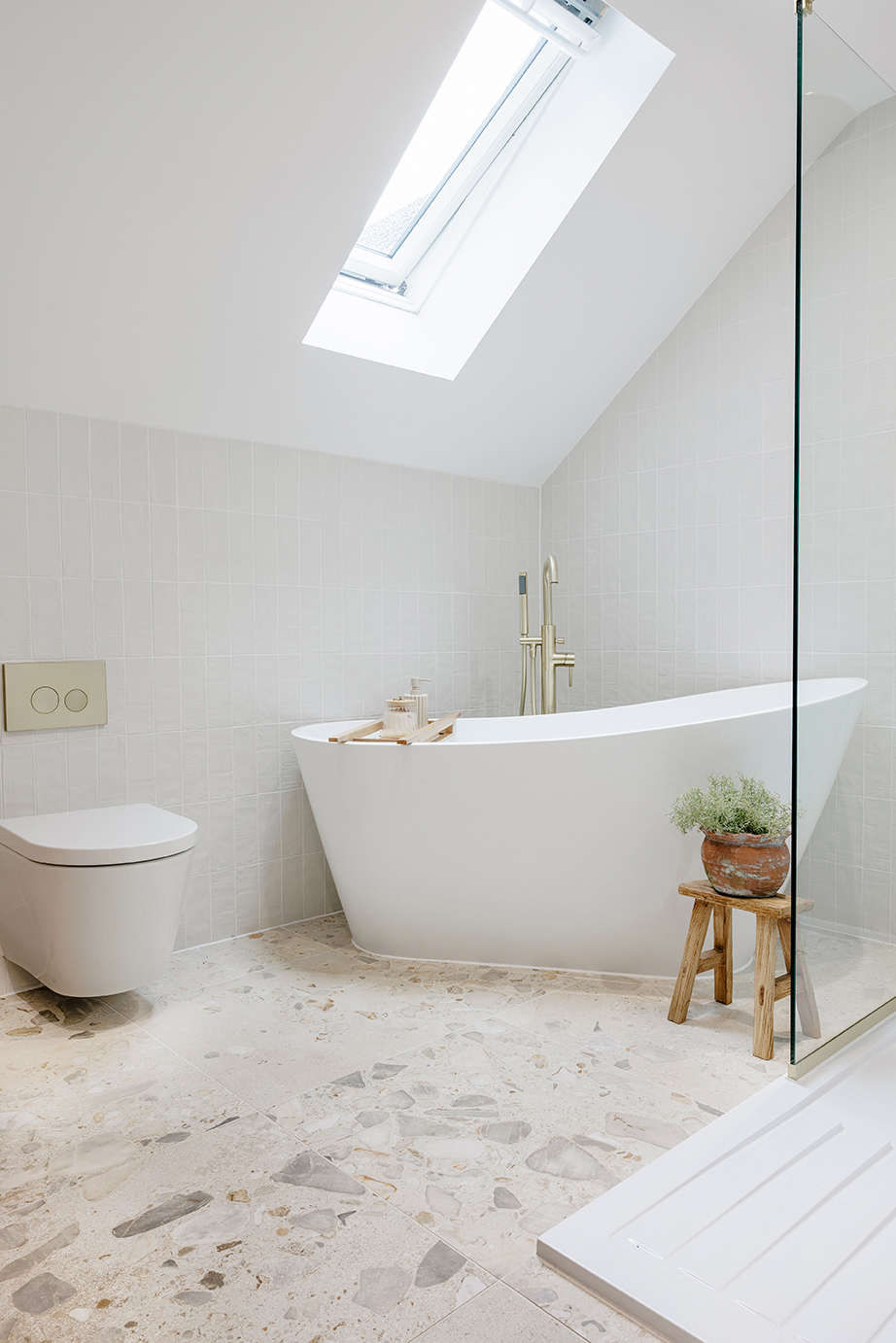
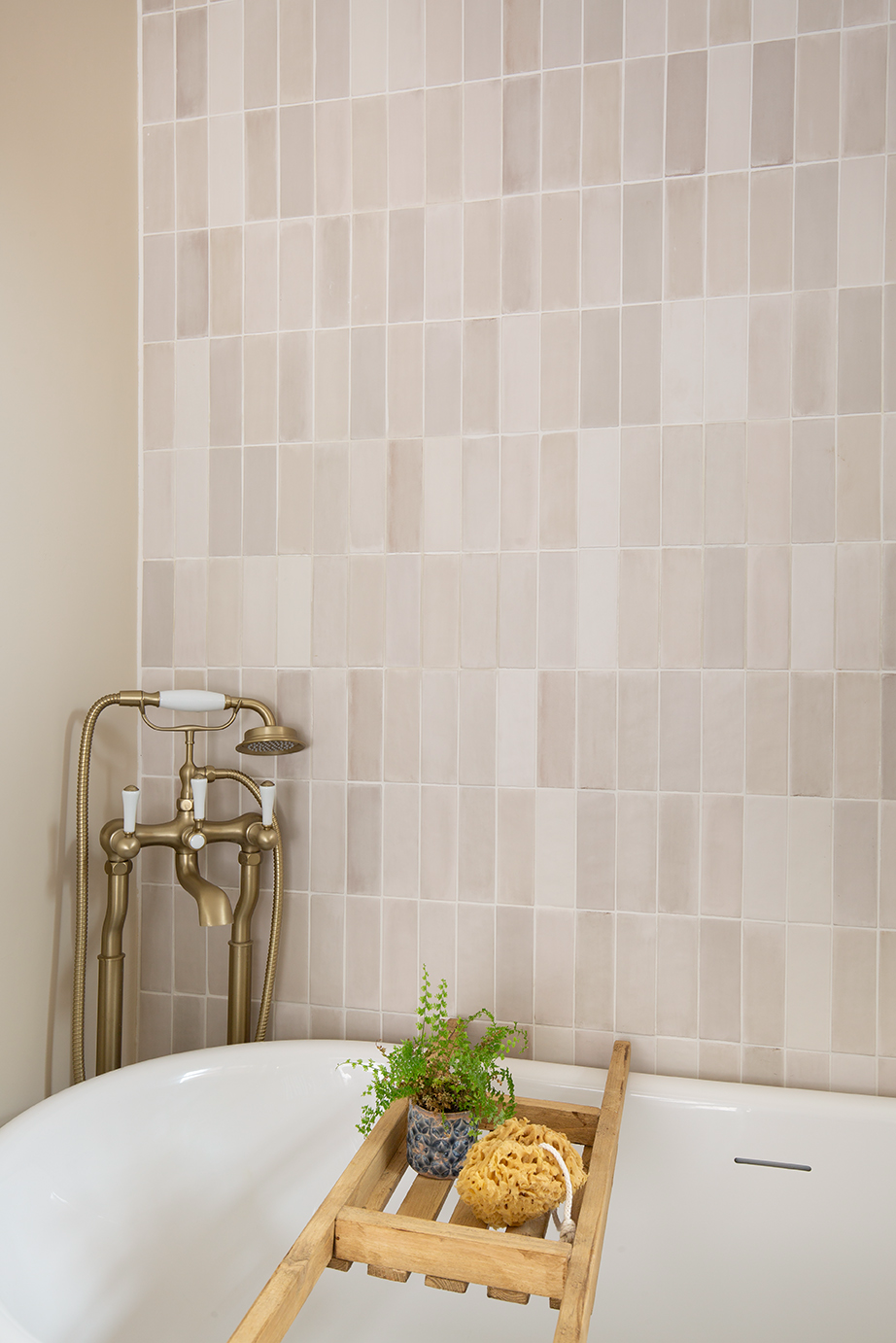
Neutral tiles are a cornerstone of contemporary bathroom design, offering a timeless appeal and the perfect canvas for textures and finishes. The Orotelli Avorio Decor introduces subtle interest with its delicate seashell detailing adding a refined decorative touch without overwhelming the space. Another neutral option is the Pastello Seashell Matt Metro featuring varying tones of soft beige creating a warm charm. These tiles provide an understated palette that feels calm and effortlessly elegant, where subtle texture and tone are key to creating a welcoming bathroom. For further reading this white bathroom tiles ideas blog will provide further inspiration.
Bathroom Practicality and Maintenance
Bathrooms are busy areas in homes so choosing tiles that fit in best with your lifestyle is key. Porcelain tiles are particularly low-maintenance and resistant to staining, while natural stone tiles require sealing and additional occasional care. Smooth, non-porous surfaces are easier to wipe down while textured or patterned tiles can hide minor marks and water spots. For tips on keeping your bathroom tiles looking new, see our guide on ways to clean bathroom tiles.
Frequently Asked Questions
What is the 1 3 rule for tiles?
The 1 3 rule is a guideline for placing tiles so that small areas are visually balanced. It recommends aligning grout lines so that walls or floors are divided into thirds for better proportions and flow.
Which is better, 40×40 or 60×60 tiles?
When choosing tile size for your bathroom, it helps to think about the overall effect you want to achieve. 40×40 tiles are perfect for smaller bathrooms or areas where you want to highlight detail, while 60×60 tiles help create a sense of space and continuity, giving a larger room a seamless, elegant finish.
What is the 3/4/5 rule for tiling?
The 3/4/5 rule is a simple method used to achieve perfect right angles and precise layouts when tiling. It’s particularly useful for creating feature walls, herringbone patterns, or any design where accuracy is key, helping your tiles sit neatly and beautifully every time.
-
We hope you feel inspired for your own bathroom renovations in the year ahead. For further inspiration and ideas explore our bathroom tile trends and modern bathroom tile inspiration. If you have questions or need personalised advice, get in touch with Quorn Stone or visit our showrooms to see the tiles in person.


