


Transforming your garden by laying limestone paving is a truly rewarding and transformative project. However, anyone who has spent some time working with natural materials will tell you that the long term beauty of a stone terrace relies entirely on how it is laid. Correct installation is just as important as choosing the right outdoor tiles. From preparing the sub-base and drainage, to selecting the ideal laying pattern, every detail contributes to creating a patio that will look beautiful and perform well for years to come.
While limestone's organic textures and muted tones offer timeless aesthetic appeal, its unique physical properties mean it cannot be treated in the same way as standard concrete paving. As a natural stone, limestone is more porous and breathable, allowing it to absorb and release moisture over time. This makes proper drainage, full mortar coverage and the use of a suitable slurry primer essential to prevent issues such as water ingress, staining, movement and frost damage. Limestone also requires sealing to help protect against everyday wear and environmental exposure. Struggling to choose the perfect stone for your project? Read more on What Is The Best Outdoor Paving For Patios.
If you are looking to refresh your garden with a natural limestone, this comprehensive guide covers honest tips and techniques needed to get your limestone patio right the first time.
Popular Limestone Paving Laying Patterns
The laying pattern you choose plays a significant role in defining the overall character of your patio. Beyond practical installation, the arrangement of the paving helps establish the architectural style of the space, allowing it to complement both your home and the surrounding garden.


Staggered (Brick Bond) Pattern
A timeless and versatile choice, the staggered or brick bond pattern offsets each row of paving to mirror traditional brickwork. As seen with our Farrow Grey Tumbled Limestone Pavers (left) and our Farrow Grey Tumbled Herringbone Cobbles (right), this arrangement works particularly well with single size rectangular slabs, creating a balanced and structured appearance that feels both classic and understated.
The staggered joints introduce subtle movement across the patio while maintaining a strong sense of order, making it one of the most popular layouts for both traditional and contemporary garden designs.


Grand Opus (Random Layout)
Limestone supplied in a classic Grand Opus pattern combines multiple slab sizes within a carefully designed repeating layout. The variation in tile dimensions helps to break up long joint lines, creating a natural and authentic appearance inspired by traditional stone courtyards and historic English cottage gardens. While the pattern follows a set repeat, the mix of sizes gives the finished patio a relaxed and organic character with the timeless look of randomly laid stone. This makes it an excellent choice for larger outdoor spaces where a more informal yet structured aesthetic is desired.

Stack Bond Pattern
For a more contemporary aesthetic, the stack bond pattern arranges cobbles or slabs in a precise grid with continuous horizontal and vertical lines. The clean geometry creates a sleek, architectural appearance that works beautifully in modern garden schemes.
As seen with our Versailles Softly Aged Herringbone Paving Cobbles (pictured), this style is particularly effective with smaller format limestone, this layout emphasises simplicity and symmetry, helping to create a calm, uncluttered outdoor space with a refined, design-led feel.


Free Length Pattern
Free length paving uses slabs of a consistent width but varying lengths, creating a layout that balances structure with natural variation. Our Dijon Tumbled Limestone Pavers (left) are a popular choice to achieve this relaxed look. The staggered joints help break up long lines across the patio, introducing movement and visual interest without appearing overly formal. This style has long been associated with traditional stone flooring and heritage properties, yet it can feel equally at home in contemporary gardens.
Most of our natural stone paving is available in a free length format, including our Versailles Softly Aged Limestone Paving (right). The varied lengths create a refined, natural appearance, making it an ideal choice for those seeking a timeless and elegant finish.


Preparing Your Site: Creating the Perfect Base for Your Patio
Planning and Excavation
Every durable patio relies on a strong base beneath the surface. Before laying any stone, take some time to carefully mark out the area using pegs and string lines, checking the diagonals to ensure the layout is perfectly square. Precision at this stage sets the standard for everything that follows.
The area should then be excavated to a minimum depth of 160mm (typically 170-180mm), allowing room for a robust build up comprising:
• A minimum 100mm layer of well-compacted MOT Type 1 sub-base
• A full mortar bed of around 40-50mm, made from 5 parts washed sharp sand and 1 part cement, mixed to a workable consistency
• The thickness of the limestone paving itself, typically 20-30mm
It's equally important to consider the finished paving level. As a general rule, the patio should sit at least 150mm below your property's damp proof course, helping to protect external walls from excess moisture and damp.
While it may be tempting to focus on the stone itself, it is this unseen groundwork that ultimately determines the longevity and stability of your patio.

Creating the Fall
A beautifully laid patio should never announce its practicality, yet effective drainage is one of the most important elements of any limestone paving project.
To prevent standing water, a subtle fall should be incorporated into the sub-base, directing rainfall away from the property. A gradient of 1:60 is what we always recommend to our customers, creating a gentle slope that is unnoticeable both to the eye and underfoot, while allowing water to drain away naturally.
Building a Solid Sub-Base
With the excavation complete, the sub-base can be installed. Spread the MOT Type 1 aggregate evenly across the area, taking care to avoid any significant hollows or uneven spots.
For the most stable foundation, the material should be compacted in layers, ideally at intervals of around 50mm. Using a vibrating plate compactor, thoroughly compact each layer before adding the next. This method creates a dependable base capable of supporting the limestone paving for many years without movement or settlement.
Although hidden from view once the patio is complete, the sub-base is arguably the most important component of the entire installation. A carefully prepared foundation provides the stability, drainage and durability that allows natural limestone to look its very best.


Step-by-Step Guide: Laying Limestone Paving
Once the foundations are firmly in place and all of your materials are prepared, the process of laying limestone can begin. This is where the project starts to take shape, with each slab gradually revealing the character of the finished space.
Step 1: The Dry Lay
Before any mortar is mixed, take time to loosely position your slabs across the space. This allows you to refine the layout, anticipate any cuts, and understand how the natural variation in tone and texture will sit together.
Limestone is inherently unique in appearance, with no two pieces exactly alike. To achieve a beautifully balanced finish, organise your slabs by tone and alternate between shades as you lay the stone. This allows the natural tonal variation and pattern of the stone to settle evenly across the patio for a balanced look.


Step 2: Preparing the Mortar Bed
Begin by troweling out enough wet mortar for your first slab, extending slightly beyond the tiles footprint to ensure full support. Smooth it carefully to a consistent depth of approximately 40-50mm, creating a solid yet workable bed for the stone to sit into.
Important: Limestone paving should always be laid on a full mortar bed to provide complete support beneath each slab. Spot or ribbon fixing should never be used, as it can lead to movement, cracking and water retention beneath the paving over time.
Step 3: Applying the Slurry Primer
Using a brush or roller, apply a thin, even coat of SBR slurry mix (made from 5 parts cement, 1 part SBR and 1 part water) across the entire underside of the limestone slab. This step should be done with care and intention, as a clean application ensures the strongest possible bond. Any accidental contact with the face of the stone should be wiped away immediately with clean water before it has time to set.


Step 4: Laying the Stone
Gently lower the primed slab onto the prepared mortar bed. Using a rubber mallet, tap the stone into position, working evenly from the center outwards until it settles firmly and aligns with your guide strings. The aim is to achieve a confident, level placement rather than force.
Step 5: Checking Levels and Fall
Using a long spirit level, check the slab against both your guide lines and adjacent stones. It is important to maintain the subtle 1:60 fall, ensuring water is directed away naturally without compromising the surface aesthetics.

Grouting and Jointing
Once all of the limestone has been laid, allow the mortar bed to cure fully before proceeding with the jointing process. As a minimum, wait 36 hours before walking on the patio or applying grout, making sure to extend this period during colder or damp weather conditions where drying times may be slower.
To complete the installation, use an external-grade grout suitable for natural stone paving. We recommend Kerakoll Fugabella Colour Stain Resistant Grout, which combines excellent water repellence with low absorption to create durable, long lasting joints that maintain their colour over time. We also carefully pair each of our tiles with a complementary Kerakoll grout shade. This helps to enhance the natural beauty of the stone while creating a seamless, considered appearance across the finished patio.
Apply the grout in accordance with the manufacturer's instructions, ensuring all joints are fully filled and free from voids. Once applied, compact and finish the joints carefully to create a durable surface.
Finally, remove any excess material from the surface of the limestone immediately, following the manufacturer's instructions. Prompt cleaning is essential to avoid grout haze or residue drying onto the stone.


Maintenance & Long-Term Care Tips
Limestone is a robust material, but a few simple, thoughtful care habits will help to preserve its character for a lifetime.
Sealing and Resealing Your Limestone
Sealing outdoor natural stone largely comes down to personal preference. Natural stone will perform perfectly well without a sealer and will naturally weather over time. However, some customers choose to apply a breathable impregnating sealer, such as Lithofin Stain Stop W, to help reduce the risk of staining and make ongoing maintenance easier. Sealing may be beneficial for those looking to keep the stone looking its best for as long as possible. If you decide to apply a sealer, ensure the stone is thoroughly clean and completely dry before treatment.

Featured tiles (2)


Routine Cleaning
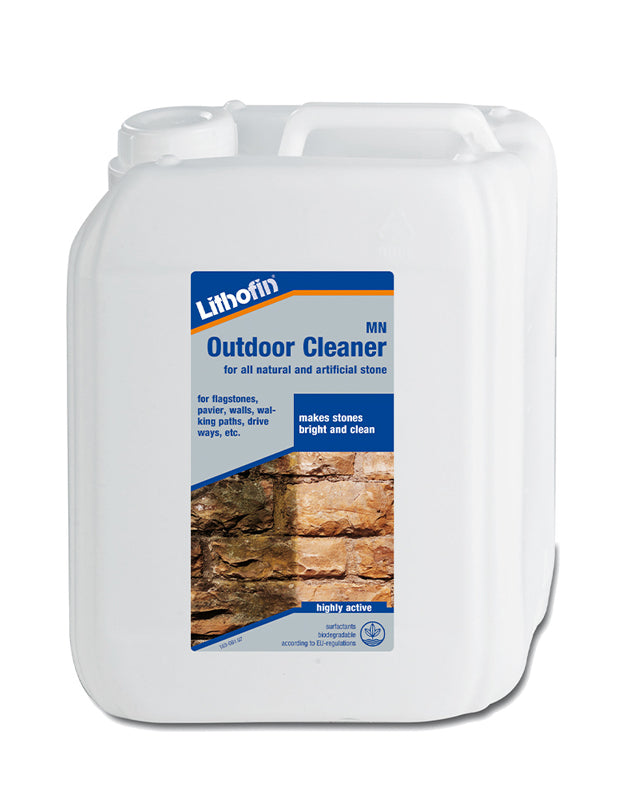
Keep things beautifully simple. Give your patio a weekly sweep with a soft broom to prevent damp leaves or organic matter from leaving tannin stains. Wash the surface down with clean water and a specialised pH-neutral stone wash like Lithofin Outdoor Cleaner.
If you prefer to use a pressure washer, use a low pressure setting, keep the nozzle at a 45-degree angle, and hold it at least 30cm away from the stone. This prevents you from eroding the delicate surface texture of the limestone or accidentally blasting out your jointing compound.


Creating a Lasting Limestone Patio
Successfully laying limestone paving is ultimately about careful preparation, attention to detail and following best practice throughout the installation process. From creating a stable foundation and effective drainage to ensuring each slab is fully supported and correctly bonded, every stage plays an important role in the long-term performance and appearance of the finished patio.
With the right installation techniques and ongoing care, natural limestone will retain its beauty and durability for many years, creating an elegant outdoor space that can be enjoyed season after season.
We hope you have found this comprehensive guide to laying limestone paving helpful. If you would like more advice, why not read our blog Outdoor Paving Ideas for 2026?
We invite you to visit one of our UK showrooms to view large floor and wall displays, along with individual tiles and samples of our natural stone paving and porcelain paving.
Alternatively, please feel free to contact our knowledgeable team for any questions or advice!


