


Your bathroom tiles are newly installed and are looking as beautiful as you hoped. Whether you have chosen the timeless charm of natural stone or the practicality of porcelain, the next step is knowing how to clean bathroom tiles so that they will look their best for years to come. A wonderful feature of natural stone is its forgiving nature, with unique fossils, tonal variation and natural markings from tile to tile, many of our customers are amazed at how great stone is at disguising day to day dirt! Porcelain is equally loved for its durability, thanks to its low water absorption, high density, and resistance to most stains, its minimum maintenance makes it a perfect choice for bathroom floor and wall tiles. Whilst most cleaning across a home follows standard routines, specific surfaces require particular attention in order to be kept in their best condition.
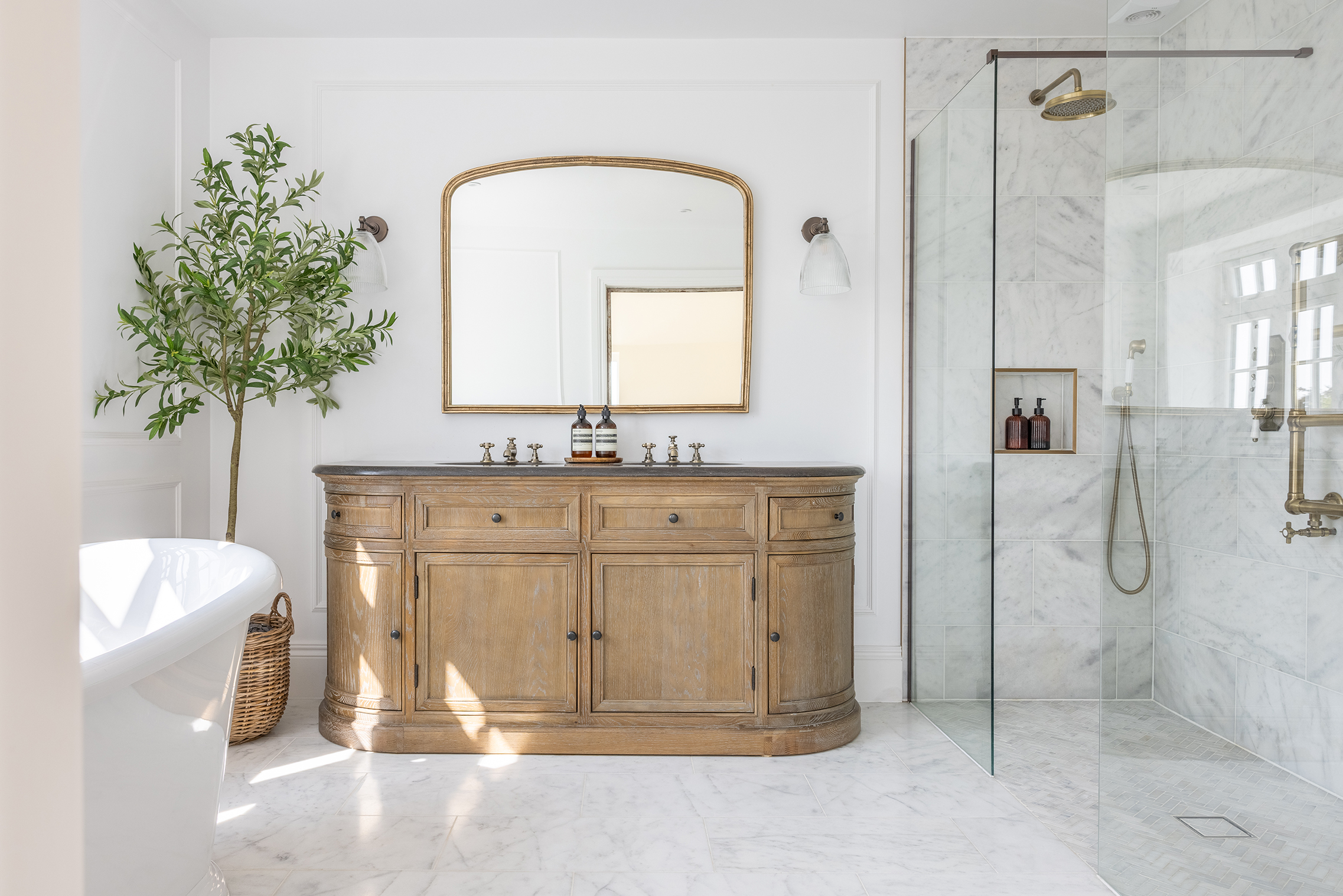
Which Tiles are Best Suited for Bathrooms?
For tiles that are practical and easy to maintain we would recommend porcelain tiles. Most porcelains do not need sealing and have a very low water absorption rate, with a porosity of under 0.5%. Porcelain tiles are scratch and stain resistant making them an ideal choice for a consistent and unchanging bathroom tile throughout the years.
If you are drawn to the timeless character of natural stone, limestone and marble bring a unique elegance, with marble tiles being a popular choice for bathrooms, thanks to their density and durability. A wonderful feature of natural stone is its forgiving and hardwearing nature, making them a perfect choice for bathrooms thanks to the natural markings, fossils and tonal variations. Although natural stones do need a little extra care especially in bathrooms, ensuring you have the correct cleaning products.
Both are beautiful choices, and whichever bathroom tiles you choose, with the right products and a regular gentle clean it will help keep your bathroom tiles looking their very best for years to come.
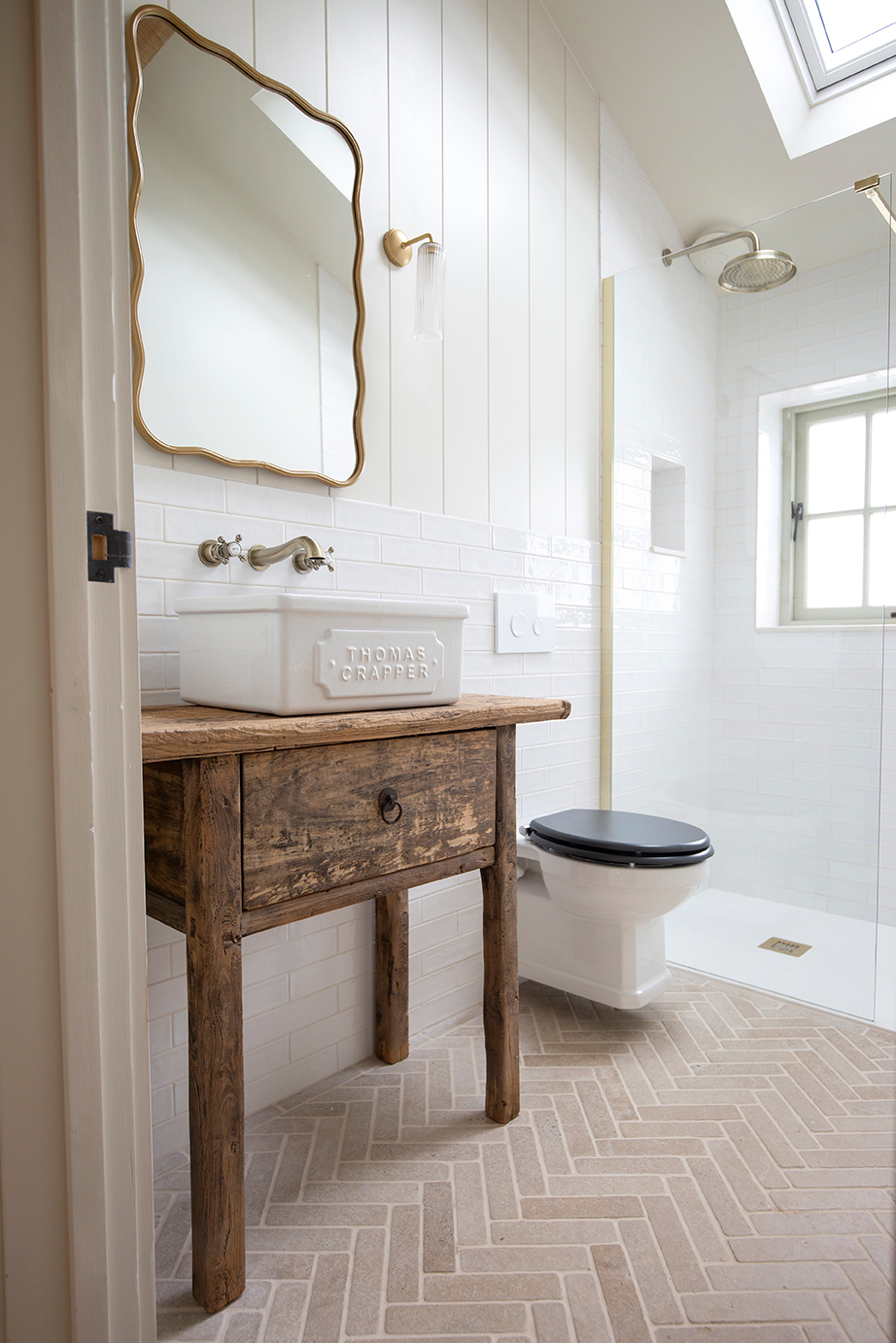
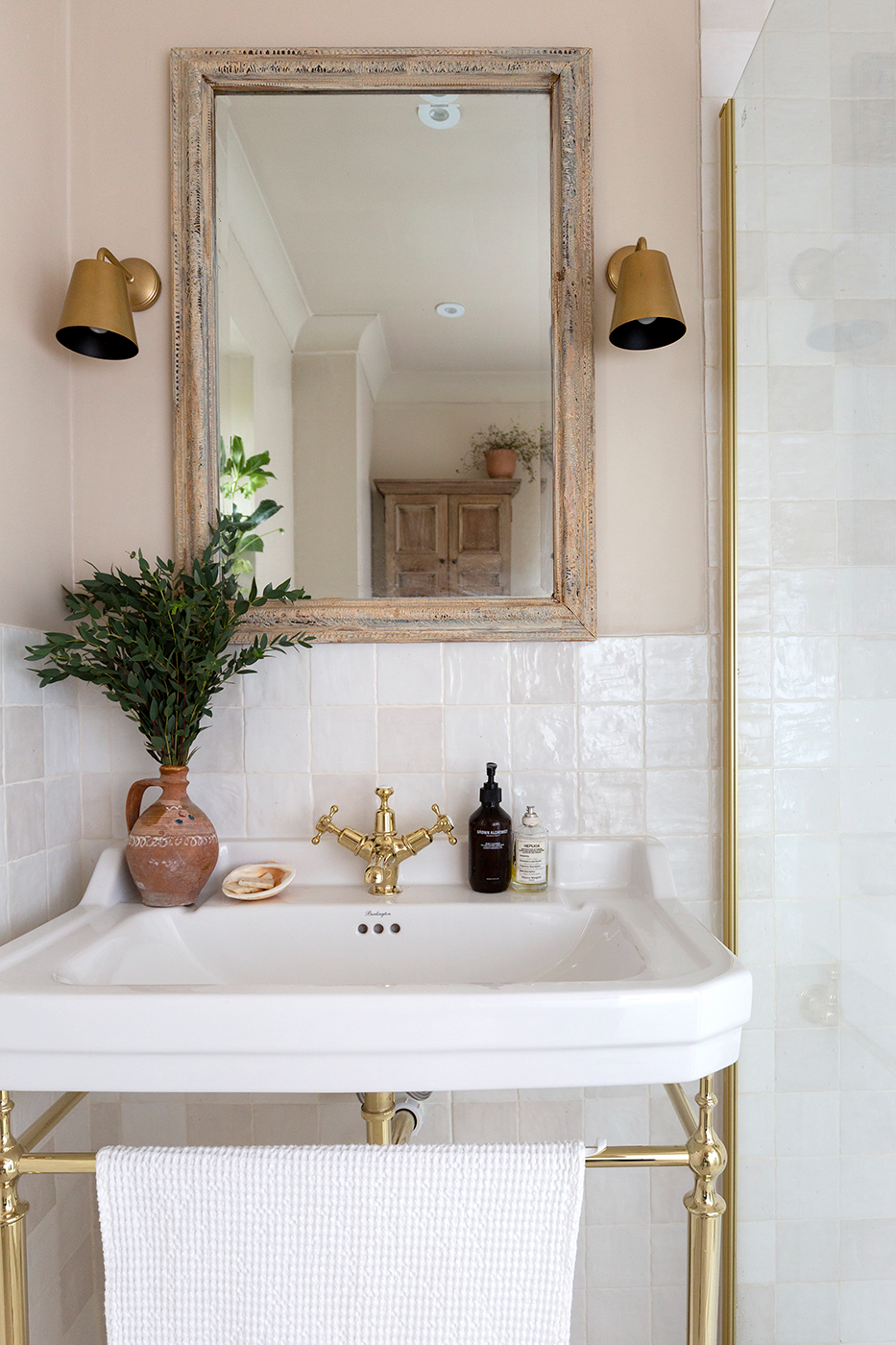
How to Clean Porcelain Bathroom Tiles
1. Vacuum or Sweep Regularly with Soft Brush Attachments
For regular maintenance and cleaning of porcelain tiles, we advise sweeping or vacuuming the porcelain tiles with a soft brush attachment. This is very effective at removing any dirt or dust off the surface of your stone effect floor. It is important to only vacuum or sweep when mud or dirt is dry.
2. Occasional Mopping
Following regular vacuuming or sweeping, we also recommend an occasional mop. For the best results we advise using the Lithofin Conditioning cleaner, diluted in warm water – this product is designed for the continuous care of porcelain flooring and will clean and maintain both textured, smooth and polished surfaces streak-free. Ensure that the floor is clear of any excess mud, dirt or dust prior to mopping. With mopping, less is often more! Always wring the mop out to remove excess water, this will help to avoid dirty water pooling in the grout joints. If you prefer, it is possible to use a steam mop on porcelain tiles, however it is unsuitable for gloss finishes. Read our Regular cleaning guide for porcelain tiles for more information.
3. Deep Clean With The Lithofin Intensive Cleaner
Whilst porcelain is very stain resistant and easy to clean, you may wish to occasionally carry out a deeper clean. For this we recommend Lithofin Intensive Cleaner which is designed to remove stubborn dirt, oil and grease. Always begin by testing the product on a tile in a discreet area, starting with the ratio of 1:10, apply generously and leave the product on for 8-10 minutes, scrub with a stiff brush every couple of minutes followed by rinsing with clean water and towel drying the surface. Continue until satisfied with the results. We do not recommend using this product neat. Read our Occasional Deep Cleaning guide for porcelain tiles for more information.
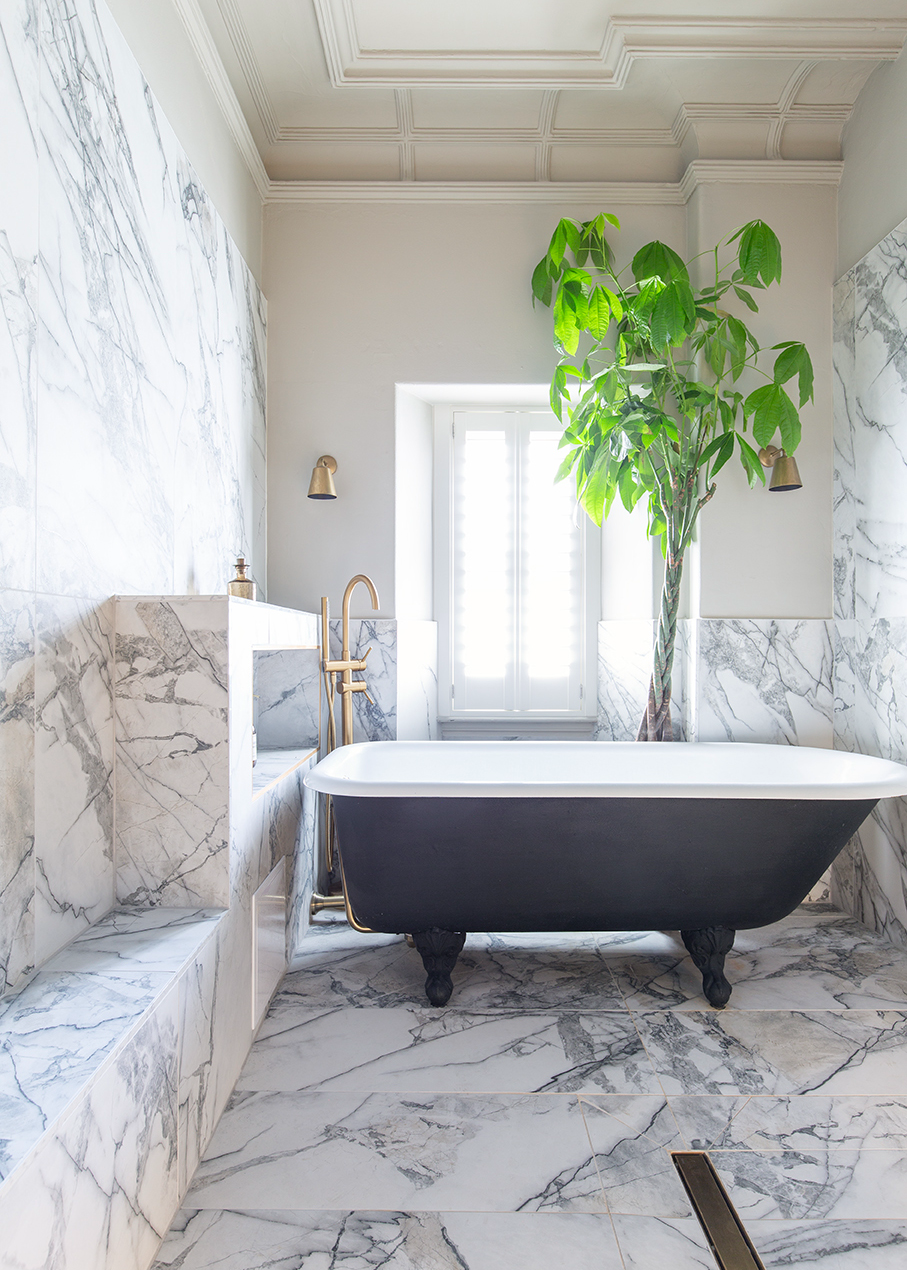
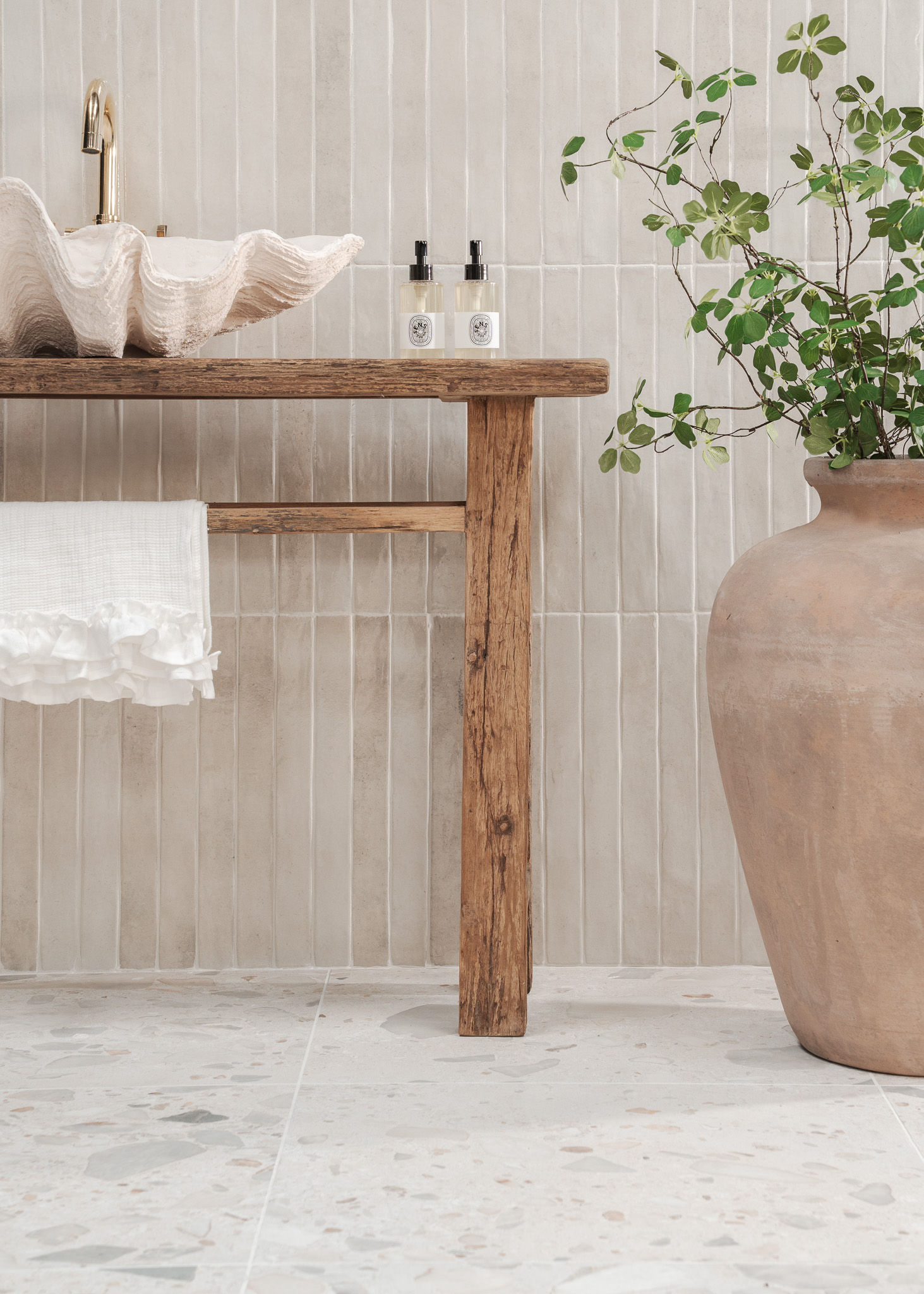
How to Clean Natural Stone Bathroom Tiles
1. Vacuum or Sweep Regularly with Soft Brush Attachments
For daily maintenance and cleaning of natural stone bathroom tiles, we advise sweeping and vacuuming with a soft brush attachment. This is very effective at removing any dirt or dust off the surface of your stone floor. It is important to only vacuum or sweep when mud or dirt is dry, doing so on wet or fresh mud runs the risk of spreading the dirt across and into the grout.
2. Use A Cleaner Suitable for Mopping Natural Stone
Natural Stone material should not be cleaned with any harsh or commercial cleaners such as bleach – acidic cleaners will eat away at the sealant and eventually damage the stone. Following regular vacuuming and sweeping we recommend occasional mopping, ensuring you use a pH neutral floor cleaner made for natural stone, such as Lithofin Wash & Clean, diluted in warm water to gently clean and maintain the natural surface of your tiles. With mopping, less is often more! We recommend keeping this to a minimum. Excessive mopping will wear away at the sealant sooner and is more likely to cause grout to discolour over time. We advise against using a steam cleaner on natural stone as this will affect the longevity of the sealant. When trying any new cleaner, we always suggest doing a patch test in an inconspicuous area of the floor to be safe.
3. Re-seal the Tiles when Necessary
Upon installation, sealing your tiles is a crucial step to help keep natural stone tiles clean and protected. The sealant acts as a protective barrier against water and stains. We recommend Lithofin Stain Stop which is a matte sealant that will not darken the colour of your tiles. For bathrooms or areas with high moisture levels, resealing may be needed more often. A great way to test if your floor needs resealing is to drop a little water onto the surface. If the sealant is still effective, the water will bead on the surface, if water soaks straight into the tiles, this is usually a sign that your natural stone floor needs resealing. Resealing is a very simple job that you can do yourself.
4. How to Remove Soap Scum from Natural Stone Shower Tiles
Natural stone in shower areas may require occasional deeper cleaning to remove soap scum, watermarking and light mineral salts, whilst sealant can protect natural stone against many day-to-day spills, it cannot protect against harsh chemicals or acidic spills. For deeper cleaning of these areas, they can be washed down with the diluted product Lithofin MN Power Clean, this can remove residues from soaps and hair products and possible efflorescence build up (white chalky dusting). The use of a white emulsifying pad will help remove slightly more ingrained contamination. The key to keeping bathroom natural stone tiles in showers clean, is to not let this type of contamination layer or form too thickly, when there is a slight sign of this type of contamination, remove to keep on top of it.
What not to do
1. Avoid using harsh cleaners such as bleach and commercial bathroom products
2. Avoid leaving spillages on the surface of the natural stone for long periods of time (especially acidic substances such as red wine, coffee and lemon juice)
3. Avoid scrubbing with anything overly abrasive or a detergent that has abrasives in
4. Avoid using vacuum cleaners with any rough or broken surfaces on the plastic attachments or wheels
FAQ's on Cleaning Bathroom Tiles
What is the Best Thing to Clean Bathroom Tiles With?
The best way to clean bathroom tiles is with a cleaner designed for your tiles. For porcelain, we recommend a product like Lithofin Conditioning Cleaner. For natural stone such as limestone or marble, always use a pH-neutral cleaner made for stone, like Lithofin Wash & Clean.
How to Clean Very Dirty Bathroom Floor and Wall Tiles?
Start by regularly vacuuming and sweeping with a soft brush attachment to remove surface dirt or dust. If you are looking for a deeper clean, we recommend occasional mopping or using a cloth with warm water and the appropriate cleaner for your tile type, diluted in warm water. For stubborn marks, an intensive cleaner can be used on porcelain, while natural stone should always be treated with care and use natural stone suited products.
What Not to Use On Porcelain Tiles?
Avoid wax polishes, oil-based cleaners, and anything abrasive, as these can leave residues and dull the finish on the tiles. You can steam mop porcelain tiles with a suitable porcelain-friendly cleaner, although if you have a gloss finish porcelain, we would not recommend the use of a steam cleaner.
How to Make Bathroom Tiles Look Clean and Shiny?
Shine comes from keeping tiles clean and free from residues. Bathroom porcelain tiles can be revived with a suitable cleaner to remove stubborn watermarks/limescale, Lithofin Ceramic Clean is a great addition to your cleaning products – always follow manufacturer guidelines during application. To restore the appearance of your natural stone bathroom tiles, we recommend a deep clean using Lithofin Power-Clean, formulated to remove stubborn dirt, oil and grease. To keep your tiles protected we recommend resealing them approx. every 4-6 years.
How To Clean A Walk-In Tiled Shower?
Regular wiping down after use helps prevent build-up. For a deeper clean, use the correct cleaner for your tiles. Natural stone can be harder to keep clean in a shower, wet room or other wet area as water and shower products can build up on the surface, causing white staining. By wiping off or squeegeeing your natural stone as much as possible after use, you can keep this staining to a minimum. Resealing your tiles every year in wet areas will also keep them easy to clean as this provides a barrier against engrained dirt, stains and watermarks.
All advice within this article is given in good faith, always follow manufacturers guidelines. We recommend conducting a test in a discreet area prior to a full application of products. Wear appropriate clothing and protective wear, such as gloves and glasses. Keep pets and children away from any treated areas until any products used have been removed.
If you found this post helpful, we also have guidance on Modern Bathroom Tile Inspiration and how to clean natural stone paving. Please do not hesitate to contact us if you have any further questions or visit one of our showrooms.


