


Choosing a natural stone floor is about more than finding a style you like. It's an investment in a material that will become part of your home for years to come, developing character as it ages. Formed over millions of years, every piece of natural stone is unique, with subtle variations in colour, texture and fossil detail that simply can't be replicated.
Whether you're renovating a country cottage, updating a period property or creating a contemporary family home, the right stone should balance practicality with timeless appeal. Understanding the qualities of each type of stone will help you choose a floor that's not only beautiful but also suited to your lifestyle and needs.
This guide explores the most popular types of natural stone flooring, and a few porcelain alternatives, explaining how each material is formed, where it works best, and what to expect from its appearance and maintenance.


What Is Natural Stone Flooring?
Natural stone tiles are made from blocks of stone quarried directly from the earth before being cut into tiles. Unlike manufactured flooring, each tile is entirely natural, shaped by geological processes over millions of years. The minerals, fossils and tonal variation within every piece mean no two floors are ever exactly alike.
As natural stone matures, it develops a gentle patina that adds depth and character to its appearance. Rather than looking worn, it gains the kind of lived-in beauty that many homeowners value. It's one of the many reasons stone has remained such a popular flooring choice for centuries.
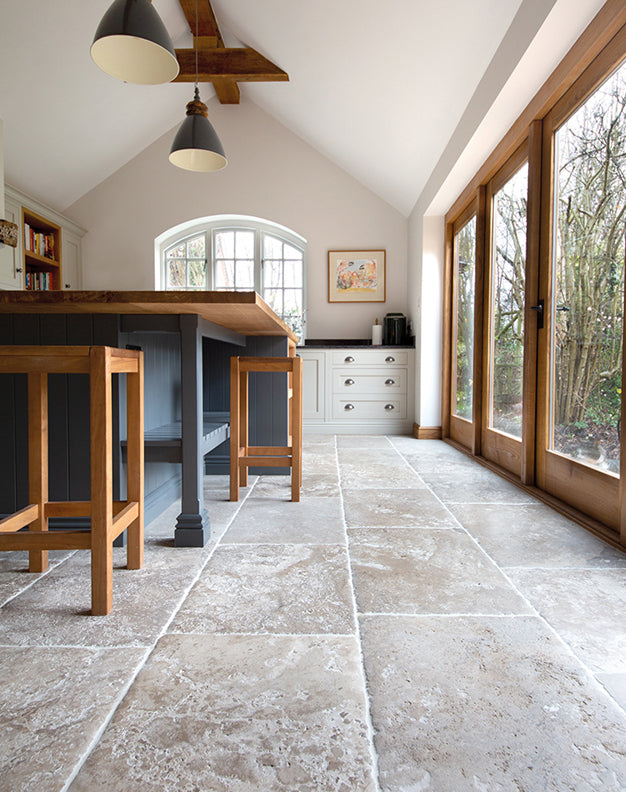
Stone is also exceptionally durable and works particularly well with underfloor heating, thanks to its excellent thermal conductivity. Whether used throughout an open-plan kitchen, as seen below with our Dijon Blend Tumbled Limestone Tiles (pictured), or in a smaller entrance hall, stone brings a sense of permanence and connection to the natural world that few other materials can compare with.


Types of Natural Stone Flooring
Every type of natural stone has its own distinctive qualities. Differences in mineral composition and the way each stone is formed influence not only how it looks, but also how it feels underfoot, how it performs and where it's best suited within the home.
Limestone: Soft Character for Everyday Living
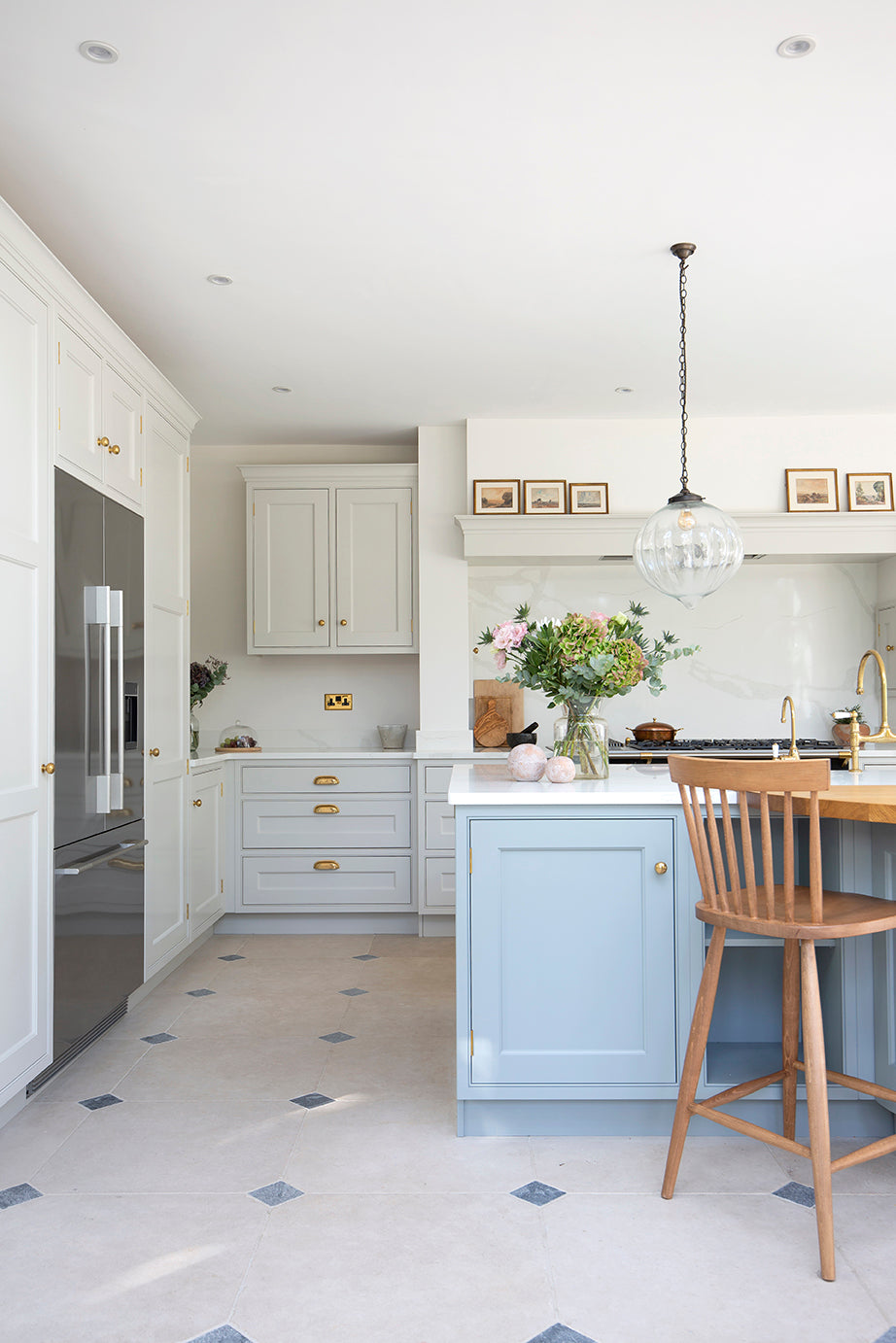
Limestone remains one of the most popular choices for residential flooring, valued for its gentle colour variation and understated appearance. Whether you choose the softly weathered finish of our Versailles Softly Aged Limestone Tiles (left) or the traditional pattern of our Versailles Manoir Cabochon Limestone Tiles (right), each tile is formed from natural limestone that developed over millions of years beneath ancient seas. Composed primarily of calcium carbonate and often containing fossilised shells and marine life, every tile has its own individual character.




Appearance
Limestone is known for its soft, muted palette. Creams, warm whites, gentle greys, beiges and olive tones create a relaxed, natural look that works equally well in traditional and contemporary interiors. Fine fossil markings and subtle movement within the stone add subtle depth and texture to a space.
Feel Underfoot
Compared with denser stones such as granite, limestone has a softer, more tactile feel. It brings warmth and comfort to everyday living spaces, making it particularly inviting in kitchens, dining areas and open-plan rooms.
Where It Works Best
Seen here in our French limestone collection, limestone flooring offers a practical yet elegant solution for busy kitchens. The naturally muted palette works beautifully with everything from painted cabinetry to natural wood finishes, creating a look that feels effortlessly refined.
As a naturally porous material, limestone should be sealed after installation and cleaned using pH-neutral products to help protect it from everyday spills and acidic substances.


Marble: Timeless Elegance
The Parisian White and Grey Tumbled Chequerboard (pictured) pairs our Parisian White Tumbled Marble Tiles with Parisian Grey Tumbled Marble Tiles to celebrate the timeless beauty of natural marble.
Marble begins life as limestone before heat and pressure deep within the earth transform it into a dense metamorphic stone. This natural process creates the distinctive veining and crystalline structure that have made marble one of the world's most recognisable decorative materials.


Appearance
No other natural stone offers quite the same visual impact. Mineral veining can be delicate or bold, flowing across the surface in shades ranging from crisp white and soft grey to rich green, violet, charcoal and deep black. Every slab is unique, making marble a striking choice wherever it's used.
Feel Underfoot
A polished marble floor feels smooth, cool and reflective, helping to bounce natural light around a room. Honed and tumbled finishes offer a softer, matt appearance while retaining the stone's luxurious character.
Where It Works Best
Showcasing the timeless appeal of natural stone, our classic collection of marble tiles features traditional chequerboard layouts (pictured), celebrating the unique character, subtle variation and enduring elegance of marble.
Exceptionally durable and timeless, marble is well suited to bathrooms, entrance halls, dressing rooms and formal living spaces, where its distinctive veining and elegant finish can be fully appreciated. As with all natural marble, we recommend using pH-neutral cleaning products and wiping up spills promptly to help preserve its beautiful appearance for years to come.


Slate: Naturally Durable
Our slate tile collection showcase the natural beauty and durability that have made slate a popular flooring choice for generations. Formed when shale or mudstone is compressed over millions of years, slate becomes an exceptionally dense and hardwearing material with a distinctive layered structure. Its naturally textured surface and rich tonal variation suit both traditional and contemporary homes alike.


Appearance
Rich charcoal greys, deep blacks, greens and rusty copper tones give slate its unmistakable character. The split surface adds texture and depth, creating a floor that feels authentic and full of natural variation.
Feel Underfoot
Slate has a gently riven surface that provides excellent grip underfoot while enhancing its rustic appeal. It feels substantial, durable and reassuringly solid.
Where It Works Best
For spaces that see plenty of foot traffic, our Brazilian Black Slate Tiles (pictured) offer a practical yet characterful flooring solution. Slate's exceptional density makes it naturally hard-wearing, while its textured surface helps to disguise the signs of everyday life. It's particularly well suited to hallways, utility rooms, boot rooms and entrance spaces, where durability is just as important as appearance.


Sandstone: Natural Texture and Organic Warmth
Formed from compressed grains of sand over millions of years, sandstone is one of the most characterful natural stones available. Its layered formation creates gentle movement throughout each tile, giving every floor a relaxed, organic feel.

Appearance
Soft bands of colour run through sandstone in shades of warm gold, buff, honey, terracotta and rich rust. These natural variations create depth and warmth, making sandstone particularly well suited to homes that embrace natural materials and earthy tones.
Feel Underfoot
Sandstone has a lightly textured surface that feels reassuringly tactile underfoot. Its natural grip makes it a comfortable choice for everyday living, while the subtle variation within each tile adds to its authentic appeal.
Where It Works Best
Our Thistleton Tumbled Sandstone Pavers (pictured) demonstrate how sandstone can be used to create a seamless transition between indoors and out. Although often associated with patios and garden spaces, sandstone can be equally effective indoors when properly prepared for internal use. It works particularly well in garden rooms, conservatories and rustic kitchens, where its warm colouring and natural character help blur the boundaries between the home and garden.
As a naturally porous stone, sandstone should be sealed after installation and maintained with pH-neutral cleaning products to help preserve its appearance over time.


Stone-Effect Porcelain: Beautiful by Design
Our unrivalled stone-effect porcelain collection demonstrates just how authentic today's stone-effect porcelain can be. Combining the timeless appeal of natural materials with the practical benefits of porcelain, these collections closely recreate the texture, tonal variation and character of limestone, making them a popular choice for both traditional and contemporary homes.


Appearance
Stone-effect tiles are available in a wide range of finishes, inspired by some of the most popular natural materials. Whether you love the soft character of limestone, the rich texture of slate, the elegance of marble or the warm, earthy tones of travertine, porcelain allows you to achieve a similar look with impressive realism. Carefully designed variation from tile to tile replicates the unique markings, tonal shifts and natural movement found in natural stone.
Feel Underfoot
Porcelain has a smooth, dense surface that feels solid underfoot and works exceptionally well with underfloor heating, reflecting the natural textured and varied look of stone.
Where It Works Best
Bringing the warmth and character of natural travertine into the heart of the home, our Hambleton Ivory Textured Stone Effect Porcelain (left) is a practical choice for busy kitchens. Combining the timeless look of natural stone with the durability of porcelain, they're ideal for spaces where everyday cooking, dining and family life demand a hardwearing, easy-care floor.
In bathrooms, our Dijon Beige Stone Effect Porcelain Tiles (right) recreate the soft tonal variation of aged limestone while offering all the benefits of porcelain. Their non-porous surface doesn't require sealing and is highly resistant to moisture and everyday staining, making them an ideal choice for creating a calm, natural look with minimal maintenance.


Choosing the Right Natural Stone
While appearance is often the starting point, practicality plays an equally important role when choosing flooring for your home. Each room has its own demands so considering how the area will be used is key. The right flooring should not only complement the character of your interior but also feel natural within the space and continue to perform beautifully for years to come. Taking the time to understand the qualities of each material will help you find a finish that balances both aesthetics and everyday living.

Busy Family Living Spaces
Open plan kitchens, dining areas and family rooms often see the greatest amount of daily activity. From muddy footprints to cooking spills and pets, these spaces benefit from a floor that's both durable and easy to live with.
If you're looking for more inspiration for a natural stone kitchen floor why not read our blog Natural Stone Kitchen Tiles Ideas?
Limestone remains one of the most versatile choices for everyday family life. A tumbled or brushed finish is particularly forgiving, it's imperfect nature softening the appearance of minor marks while complementing a wide range of interior styles. If you're looking for a lower-maintenance alternative, high quality stone-effect porcelain offers a similar aesthetic with very little ongoing upkeep.
Bathrooms and Wet Rooms
Bathrooms bring their own practical considerations, with moisture, humidity and regular splashes all influencing which flooring works best.
Marble is a timeless choice for bathrooms, bringing natural character and understated elegance to the space. For flooring, opting for a tumbled finish offers a beautifully soft appearance with added grip underfoot, while polished marble can be used to create a light-reflecting feature on walls or in shower enclosures. For a decorative touch, the Mont Blanc Honed Marble Stick Mosaic Tiles (left) introduce subtle texture and refined detail, while the Parisian Manoir Cabochon Marble Tiles (right) offer a classic heritage-inspired design that suits both traditional and contemporary bathrooms.


Hallways, Boot Rooms and Utility Spaces
Entrance areas work harder than almost any other room in the home. Dirt, grit and moisture are all carried inside on a daily basis, making durability an important consideration.
Limestone is a popular choice for these hardworking spaces thanks to its natural durability and timeless appearance. Its softly textured surface creates a relaxed, lived-in feel while providing a practical flooring solution for busy areas. The Dijon Seasoned Limestone Herringbone Tiles (pictured) are particularly well suited to busier spaces, with their classic herringbone format adding character and movement while the seasoned finish helps disguise the marks of everyday life.


Natural Stone or Porcelain?
Both natural stone and porcelain have their own advantages. Natural stone offers unique variation and develops character over time, while stone-effect porcelain provides a practical, low-maintenance alternative that captures the beauty of natural materials with impressive accuracy. The Dijon Tumbled Limestone Tiles (left) showcase the authentic charm of gently weathered limestone, with softened edges and unique variation that only natural stone can provide. For those seeking the same timeless look with easier maintenance, the Dijon Rendition® by QS Stone Effect Porcelain Tiles (right) faithfully recreate the character and texture of natural limestone in a durable porcelain format, making them ideal for busy family homes.
Natural stone requires sealing and will continue to evolve as it ages, developing a soft patina that's unique to every floor. Porcelain, on the other hand, is non-porous, doesn't require sealing and offers excellent resistance to staining, making it particularly well suited to busy households.
The right choice depends on the look you're hoping to achieve, how the space will be used and the level of maintenance that best suits your lifestyle. If you'd like some more guidance on flooring materials, you can read our blog, Natural Stone vs Porcelain Tiles here.


Stone Flooring Finishes
The finish you choose has a significant impact on both the appearance of your floor and how it performs in everyday life. While the stone itself provides the character, the finish determines everything from how it reflects light to how it feels underfoot.
Whether you're creating a relaxed farmhouse kitchen or a clean, contemporary living space, selecting the right finish is just as important as choosing the stone itself.
Tumbled Finish
A tumbled finish is created by gently ageing the stone in large rotating drums with water, sand and small stones. This softens the edges and lightly textures the surface, creating a naturally weathered appearance.
With its softened edges and timeworn character, tumbled stone has the feel of traditional flagstone floors that have aged beautifully over generations. It works particularly well in period properties, country homes and farmhouse kitchens, but can also bring warmth and character to newer interiors. The Sorrento® Aged Tumbled Limestone Tiles (pictured) perfectly capture this timeless appeal, with gently worn edges and rich tonal variation creating an authentic, lived-in look. Their textured surface also helps to disguise the marks of everyday life, making them a practical and characterful choice for busy homes.


Honed Finish
A honed finish is created by grinding the surface of the stone until it becomes smooth and flat, stopping before a polished sheen develops.
The refined matt finish of honed natural stone allows its natural colour and variation to take centre stage, creating a clean look that suits both classic and contemporary interiors. The Carrara Bianco Honed Marble Tiles (left) are a timeless choice, showcasing soft grey veining against a crisp white background that pairs beautifully with natural materials and minimalist cabinetry. For a more decorative approach, the Riviera White and Black Honed Marble Chequerboard (right) offers a striking interpretation of the classic chequerboard floor, with the honed finish providing a beautifully smooth, understated appearance.


Seasoned Finish
A seasoned finish is created by gently acid washing the surface of the stone. The process gently softens the edges and subtly weathers the surface, creating an antique matte finish with a naturally aged appearance and warmer tones.
The result is a beautifully aged finish with subtle variation and a gently textured surface that feels authentic and tactile underfoot. The Dijon Seasoned Limestone Tiles (pictured) are a perfect example, combining soft, weathered tones with a naturally lived-in appearance that brings warmth and character to a space. This finish works particularly well in kitchens, hallways and open-plan living areas, offering a practical surface that complements both traditional homes and relaxed contemporary interiors.


Brushed Finish
A brushed finish is created by gently treating the surface of the stone with abrasive brushes, removing the softer particles while preserving its natural character. This process produces a subtle texture with a soft, matt appearance that feels smooth underfoot. The Dijon Brushed Limestone Tiles (left) highlight this finish beautifully, with their warm, natural tones and gently textured surface creating a relaxed, contemporary feel.
For a cooler colour palette, the Clermont Gris® Brushed Limestone Tiles (right) offer soft grey tones with understated movement, making them equally suited to modern and classic interiors. Brushed finishes soften colour variation while allowing the stone's character to show. Their understated texture adds depth without feeling overly rustic, making them a popular and practical choice for kitchens, bathrooms and open-plan living spaces.


Stone Tile Formats
The size and laying pattern of your flooring can completely change how a room feels. The same stone can create a clean, contemporary look or something altogether more traditional, depending on how it's laid.
Grand Format Tiles
Large-format tiles, typically measuring 600 x 900mm or larger, create a calm and seamless appearance by reducing the number of grout lines across the floor.
With fewer joints between tiles, larger formats can help spaces feel more open and balanced, making them particularly well suited to open-plan kitchens, living areas and contemporary extensions where a clean, uninterrupted finish is desired. Available in a generous 900 x 600mm format, the Windsor Grey Tumbled Limestone Tiles (pictured) create a seamless, spacious feel, while their tumbled finish and subtle grey tones bring timeless character to both traditional and contemporary interiors.


Opus Pattern
The Opus pattern is a modular layout formed from a predefined mix of square and rectangular tile sizes. Installed in a repeating sequence (left), it creates a varied, organic appearance that reduces long grout lines and reflects traditional layouts associated with historic stone flooring.
The Dijon Tumbled Limestone Tiles (right) showcase timeless layout in our most popular limestone, with warm, varied tones and a gently textured surface that brings character and depth to the pattern.
The varied tile sizes create natural movement across the floor, adding depth and character without feeling overly formal. This classic layout is particularly well suited to period properties, country homes and barn conversions, while also bringing a sense of heritage and warmth to contemporary interiors.


Free Length
Free Length tiles are a popular format, taking inspiration from reclaimed and traditional stone floors, using tiles of uniform widths but varying lengths to create a softer, more organic feel. The irregular arrangement helps to avoid a uniform appearance, making it particularly suited to traditional interiors and characterful spaces.
The Monte Carlo Tumbled Limestone Tiles (left) embrace this timeless look with their softly worn edges and authentic aged character, while the Tuscany Seasoned Limestone Tiles (right) offer a beautifully weathered finish with gentle tonal variation. Both are available in a free length format, making them particularly well suited to older properties, barn conversions and homes where texture, character and a natural flow are central to the design.




Herringbone
Herringbone layouts use smaller rectangular tiles arranged in a distinctive zigzag pattern to introduce movement and character across the floor. While traditionally associated with timber flooring, this timeless design works beautifully with natural stone, bringing added texture and heritage appeal to both classic and contemporary interiors.
Our Dijon Tumbled Herringbone Tiles (left) offer the warm, beige tones and softly weathered finish of aged limestone, while the Versailles Softly Aged Herringbone Tiles (right) feature a beautifully worn surface with subtle tonal variation for an authentic reclaimed look. The angled laying pattern creates a sense of flow, drawing the eye through a space while adding a refined decorative finish. Herringbone is particularly effective in hallways, kitchens and smaller rooms where the flooring is intended to become a key feature.


Finding the Right Stone for Your Home
Natural stone is material that brings lasting character to a home, evolving gently over time and becoming part of everyday life. From the quiet elegance of limestone to the striking beauty of marble, every stone offers something different to a space.
The best way to appreciate these differences is to experience them in person. Photographs can capture colour, but they rarely convey the subtle texture, variation and natural character that make each stone beautiful and unique. We invite you to visit one of our UK showrooms to view large natural stone and porcelain floor and wall displays, along with individual tiles and samples of our natural stone tiles and stone-effect tiles.
We hope this guide has helped you to understand the key differences and practical considerations of both natural stone and porcelain tiles. If you would like more some more inspiration, why not read our blog Natural Stone Flooring Ideas for 2026?
Alternatively, please feel free to get in touch with Quorn Stone for any questions or advice!


