


Herringbone tiles, also known as herringbone pattern, offer a classic and timeless method of arranging rectangular tiles to create a distinctive and visually appealing flooring. With a history dating back to ancient civilisations the herringbone pattern has long been celebrated for its enduring style. From ancient Roman roads to Elizabethan Renaissance floors, herringbone tiles were often put in combination with other patterns to create intricate and artistic designs on floors and walkways. In this post we are sharing some of our favourite herringbone flooring ideas to spark inspiration for your own home or garden.
Natural Stone Herringbone
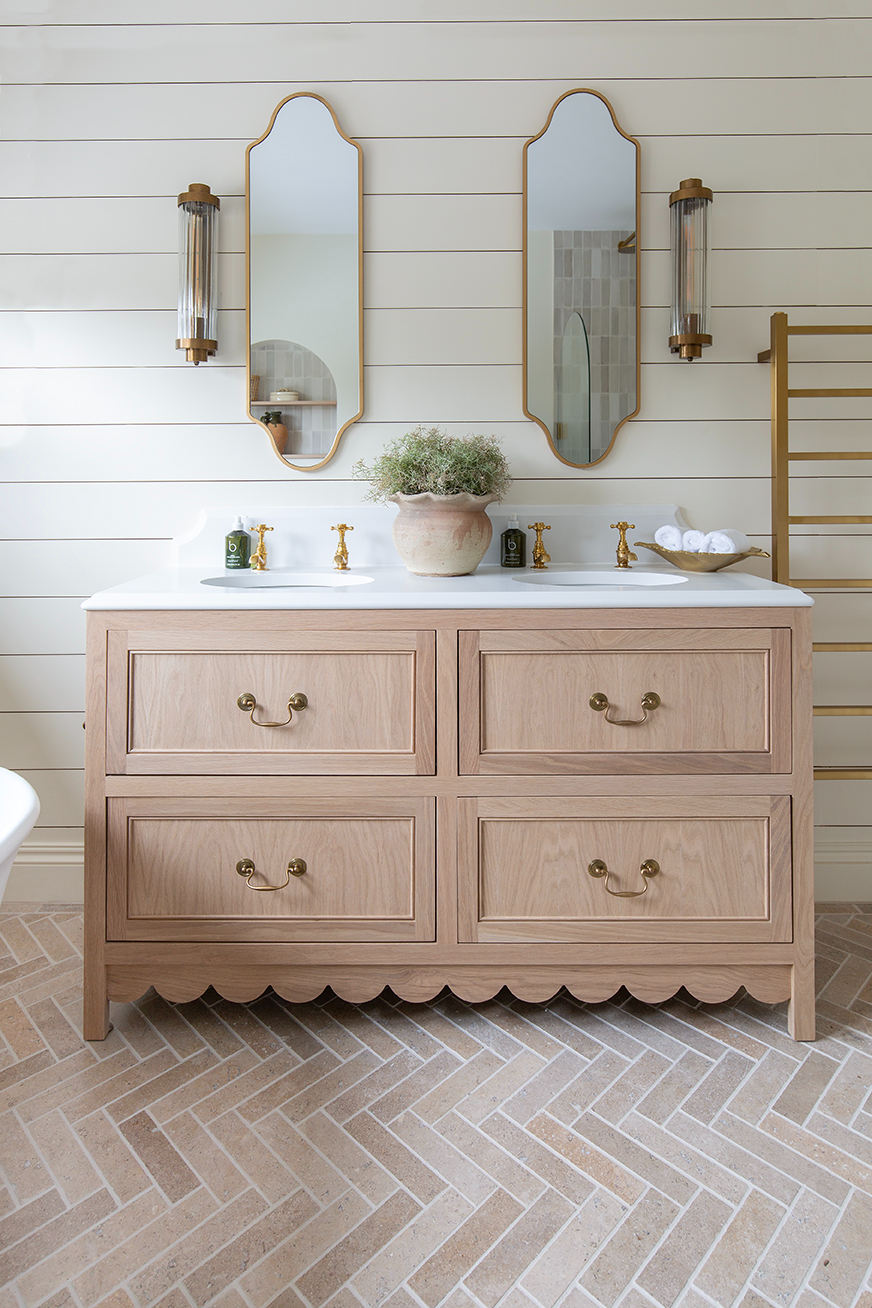
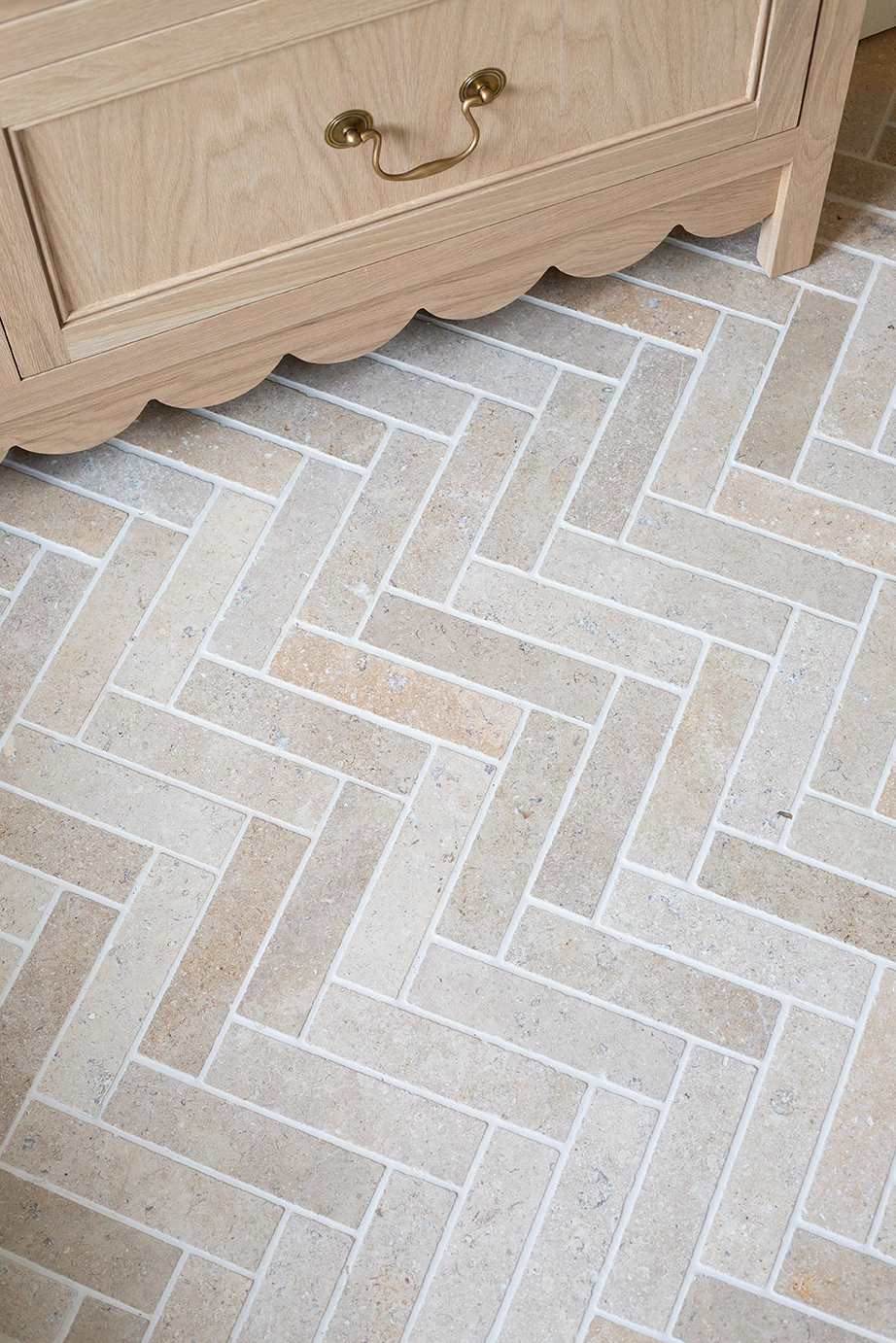
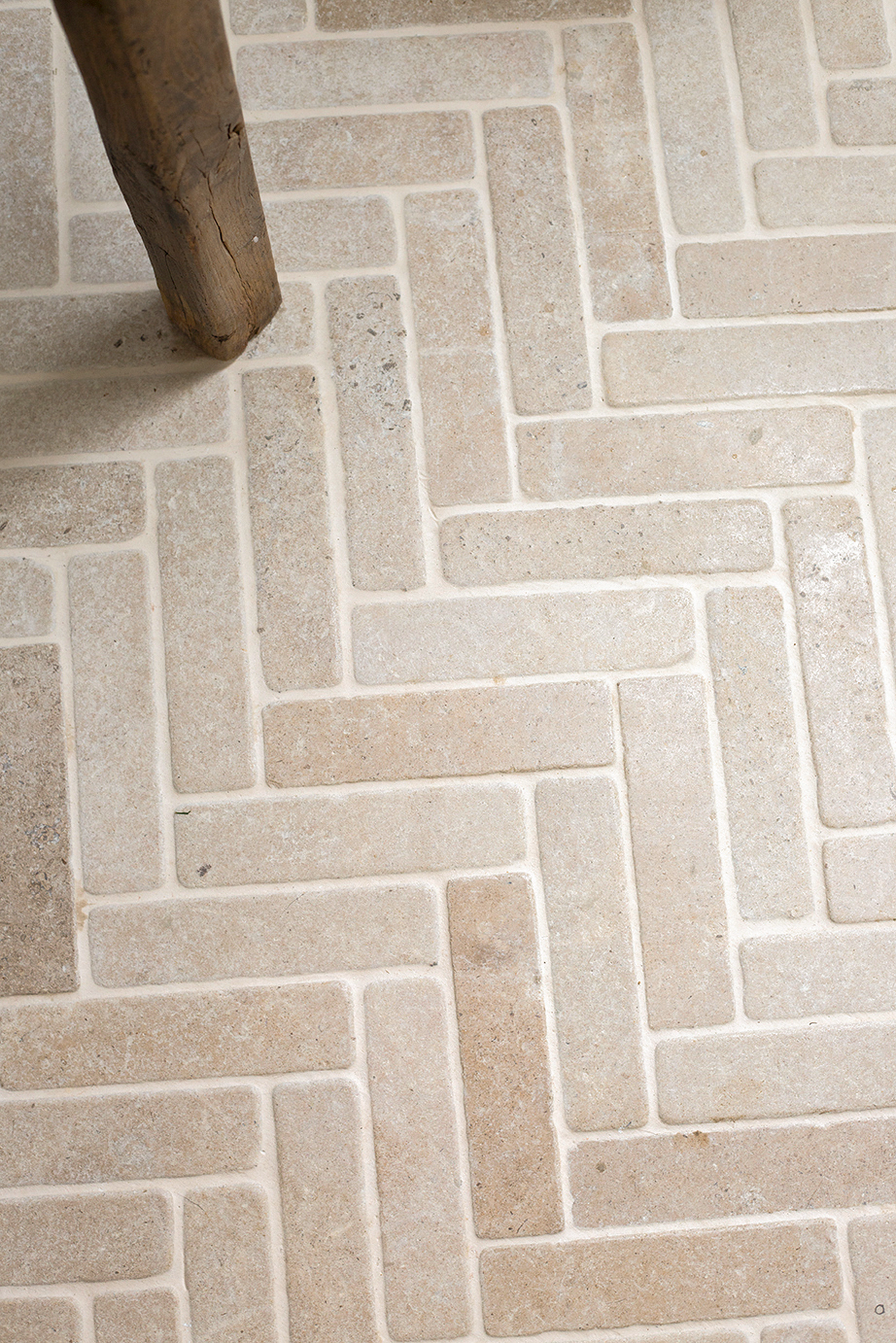
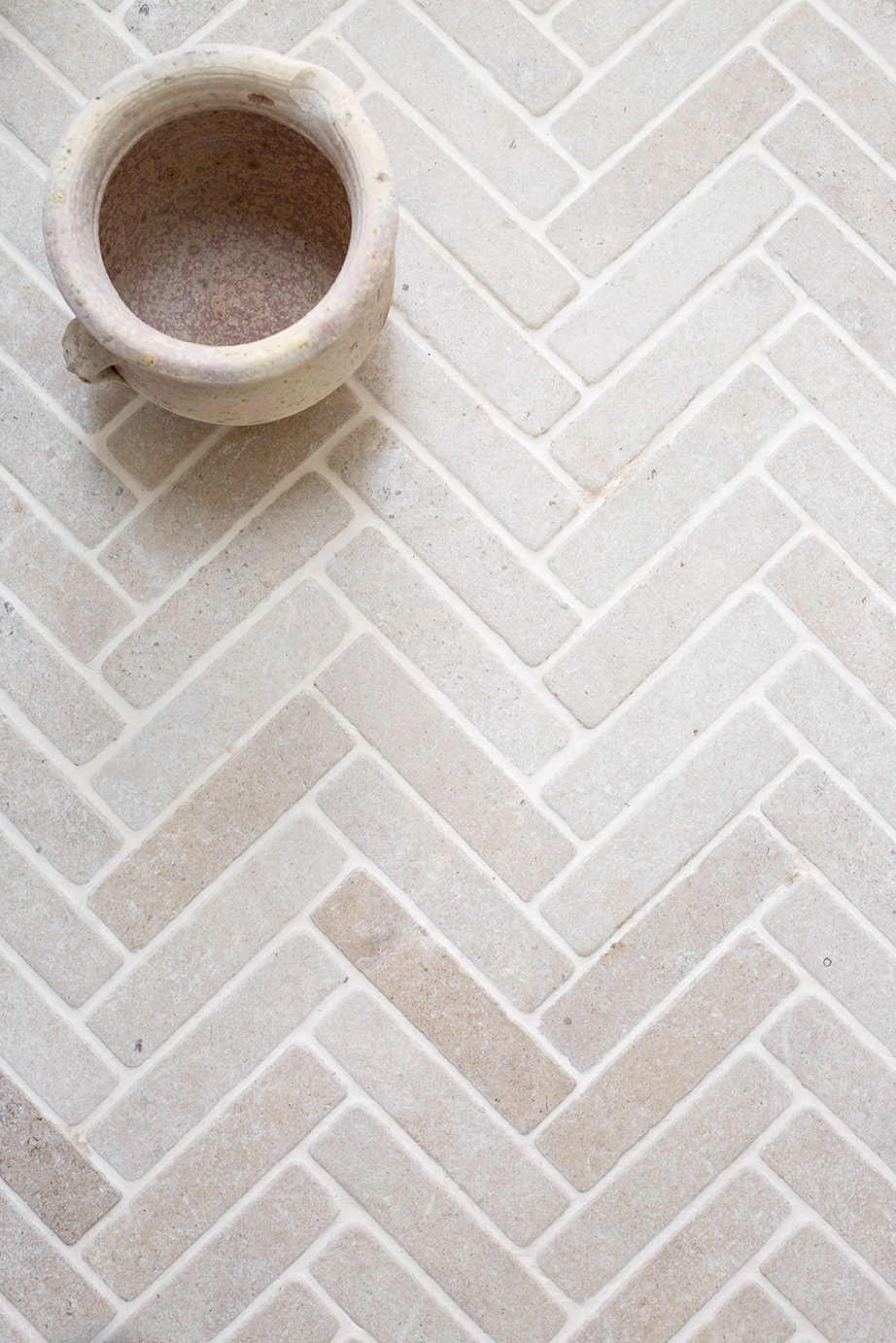
Natural Stone herringbone tiles bring both charm and practical durability, perfect for kitchen and bathroom floors alike. Their slim format enhances the sense of space, while their neutral shades add subtle decorative warmth. The Tuscany tumbled herringbone brick and Dijon tumbled herringbone tiles are both warm honey toned stone, featuring subtle variation as well as rich fossilisation. Their neutral tones set against a white bathroom scheme help to create a light and airy feel with a rustic charm.

Marble Herringbone
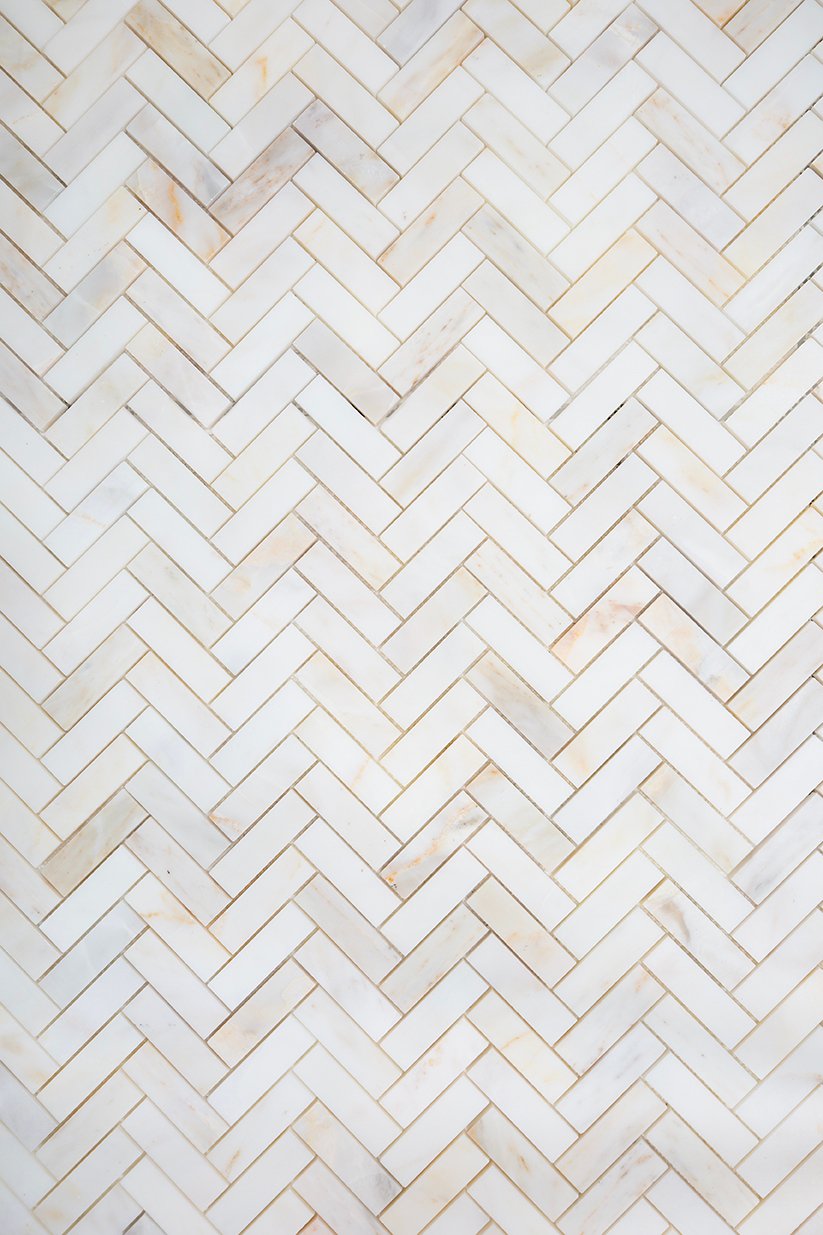
Marble tiles have long been favoured for their density, durability and timeless appeal. As a natural stone, marble is available in a variety of colours, each with its own unique patterning and details. For a herringbone pattern, the Carrara Viola metro tiles are a favourite, offering a popular honed finish and unique purple veining. This herringbone tile is a perfect way to add an opulent and refined feel to any floor. Another elegant choice is the Carrara Oro honed, featuring a soft white background and beautifully warm amber veining. Their honed surfaces make them a versatile choice that compliment both traditional and contemporary homes.

Terracotta Effect Herringbone
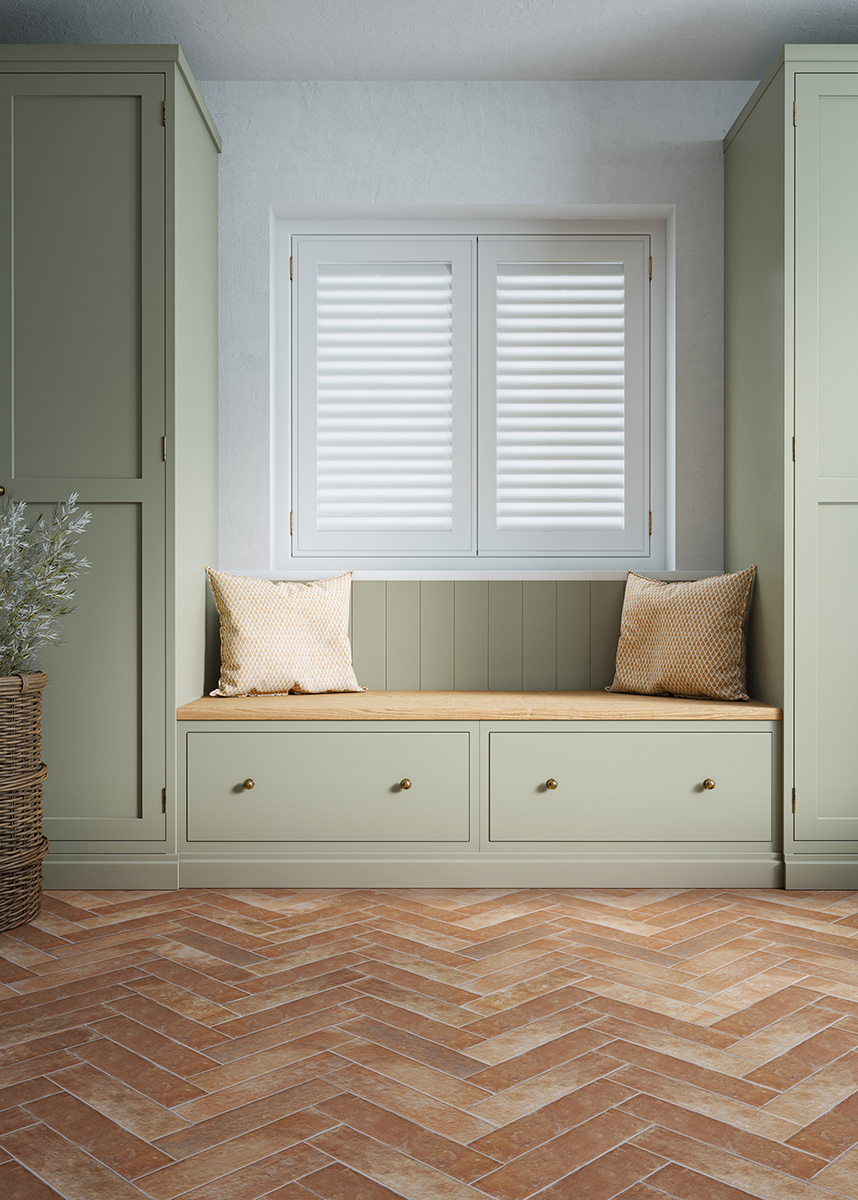
The terracotta effect porcelain tiles capture the warmth and earthy character of traditional terracotta floor tiles, known for their rich, earthy tones, without the need to be sealed or treated. The Oliva Rojo Metro is available in a variety of patterns such as hexagon, metro and herringbone, bringing warmth to kitchen, bathroom or hallway floors. Another option is the Campello Cotto which offers both classic Brick or metro tile formats and can be laid in various patterns, from the herringbone pattern, to stacked or brick bond. Combining their rustic appearance with everyday durability, these terracotta-effect tiles offer a practical yet characterful choice for any floor.

Wood Effect Herringbone
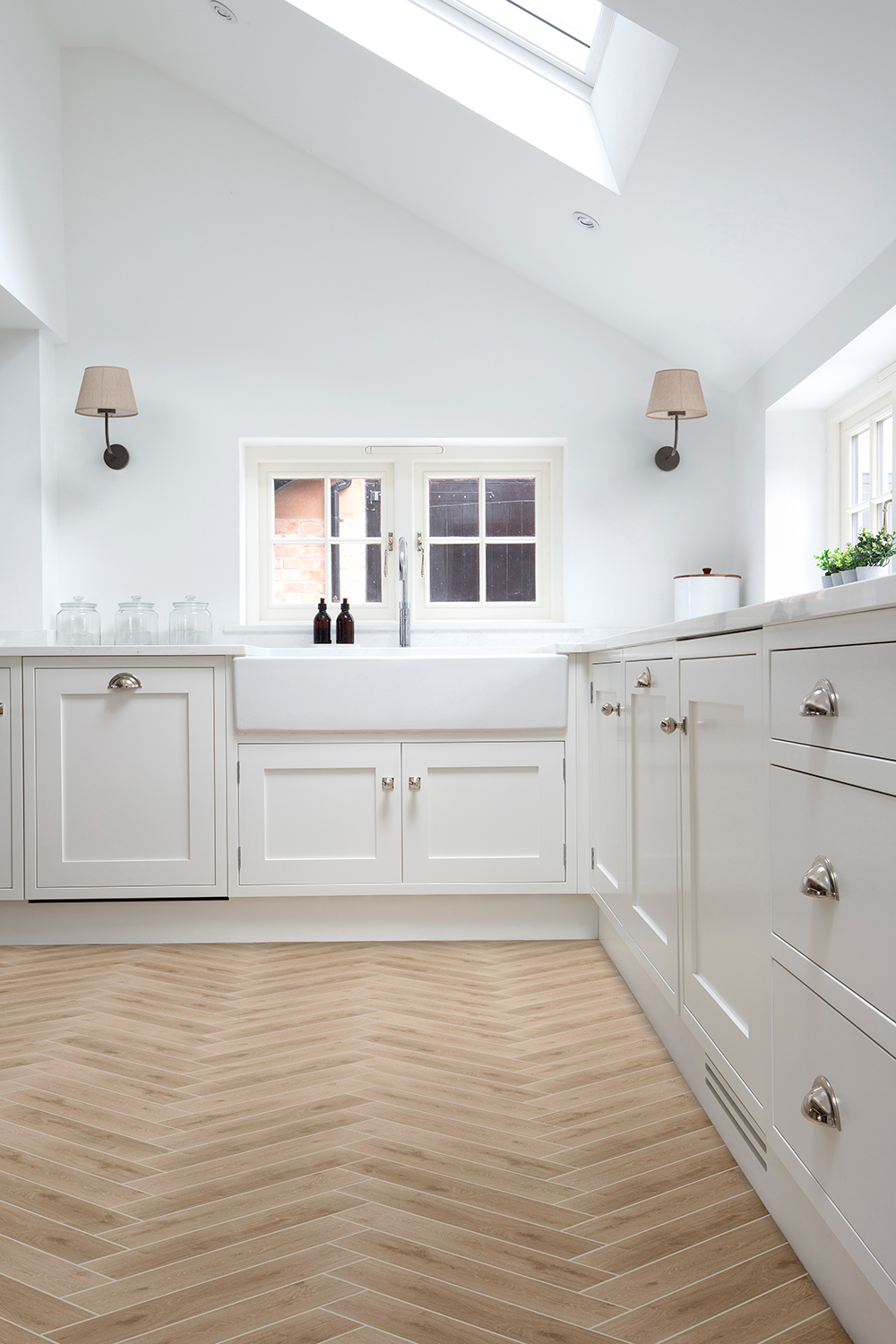
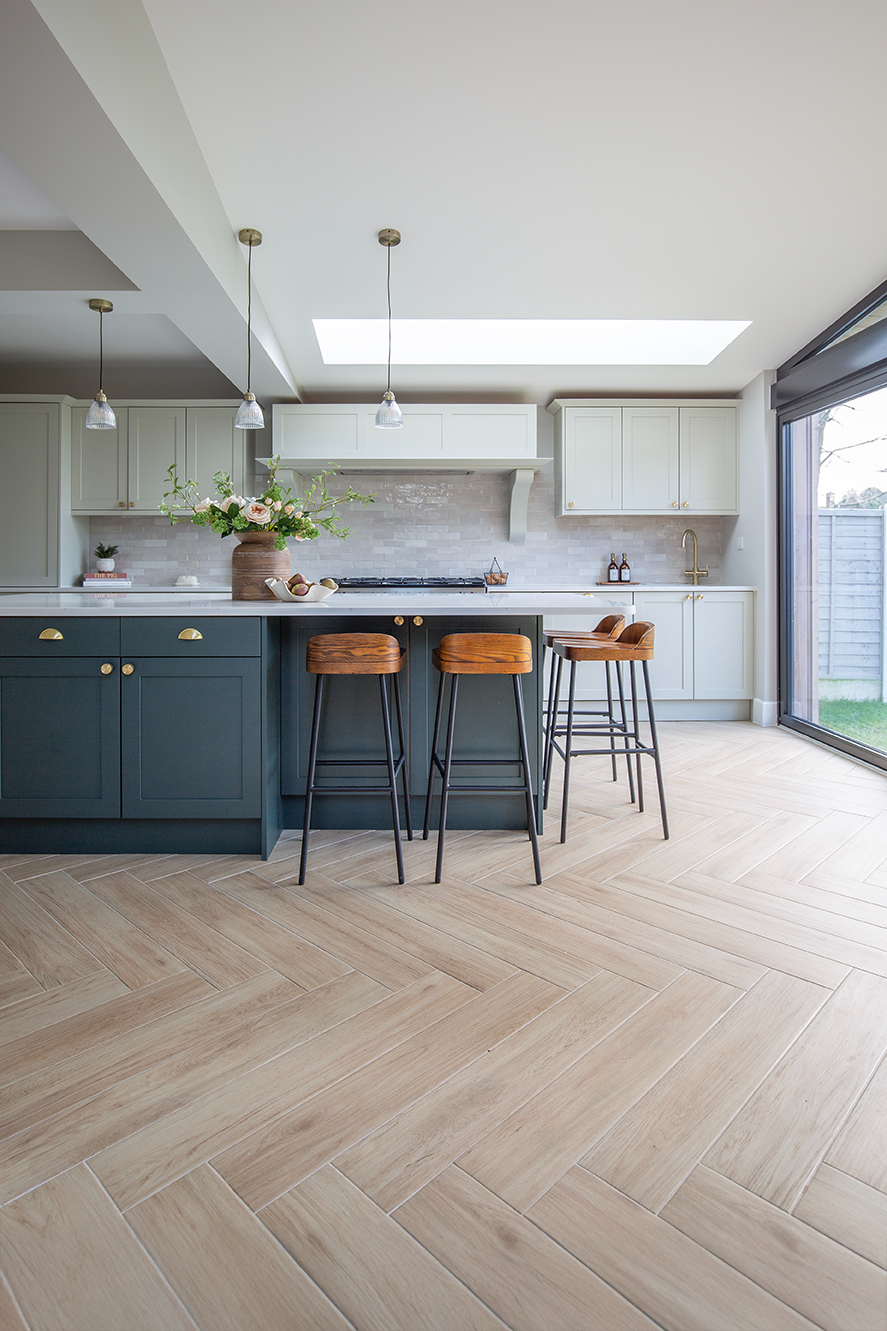
Wood-effect porcelain tiles are a popular and practical alternative to solid wood flooring; the print and tones mimic the look of natural wood without the maintenance. The Eaton Oak is perfect for a herringbone kitchen floor, featuring a beautiful true oak colour replicating the look of wood with realistic knot and grain details. In a small plank size, it really does mimic classic parquet wood flooring – our top tip is to go for a narrow grout line that matches the tiles colour for a truly authentic feel. Also shown is the Falmouth Sandy Oak wood effect as another beautiful herringbone pattern option, bringing soft sandy tones and a light natural feel.
Stone Effect Herringbone
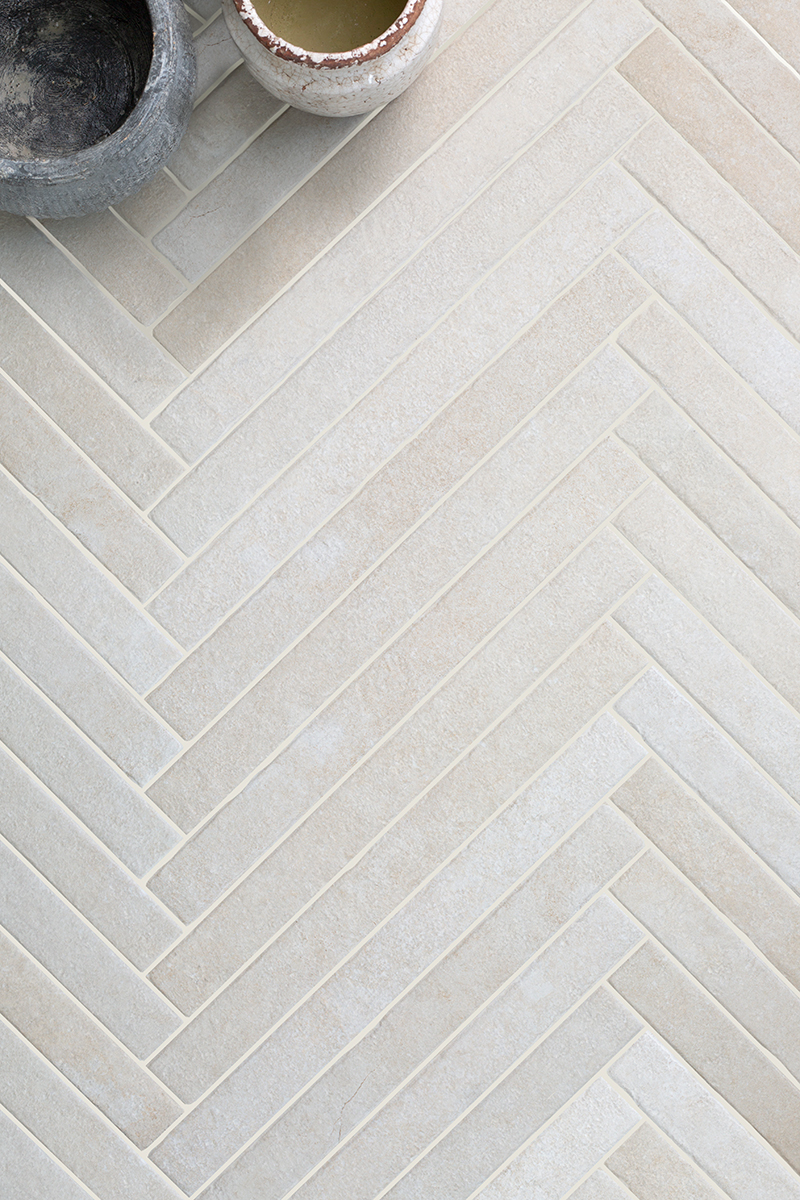
For those who love the charm of natural stone but are looking for a low maintenance option, porcelain tiles featuring a tumbled effect edge are increasingly popular for busy homes. The Castello tumbled herringbone offers a porcelain take on classic herringbone brick tiles, available in three natural shades Stone, Sand and Ivory. This stone effect porcelain beautifully captures the character of natural stone, with its gently worn edges and soft tonal variation bringing timeless appeal to any floor.

Natural Stone Herringbone Paving
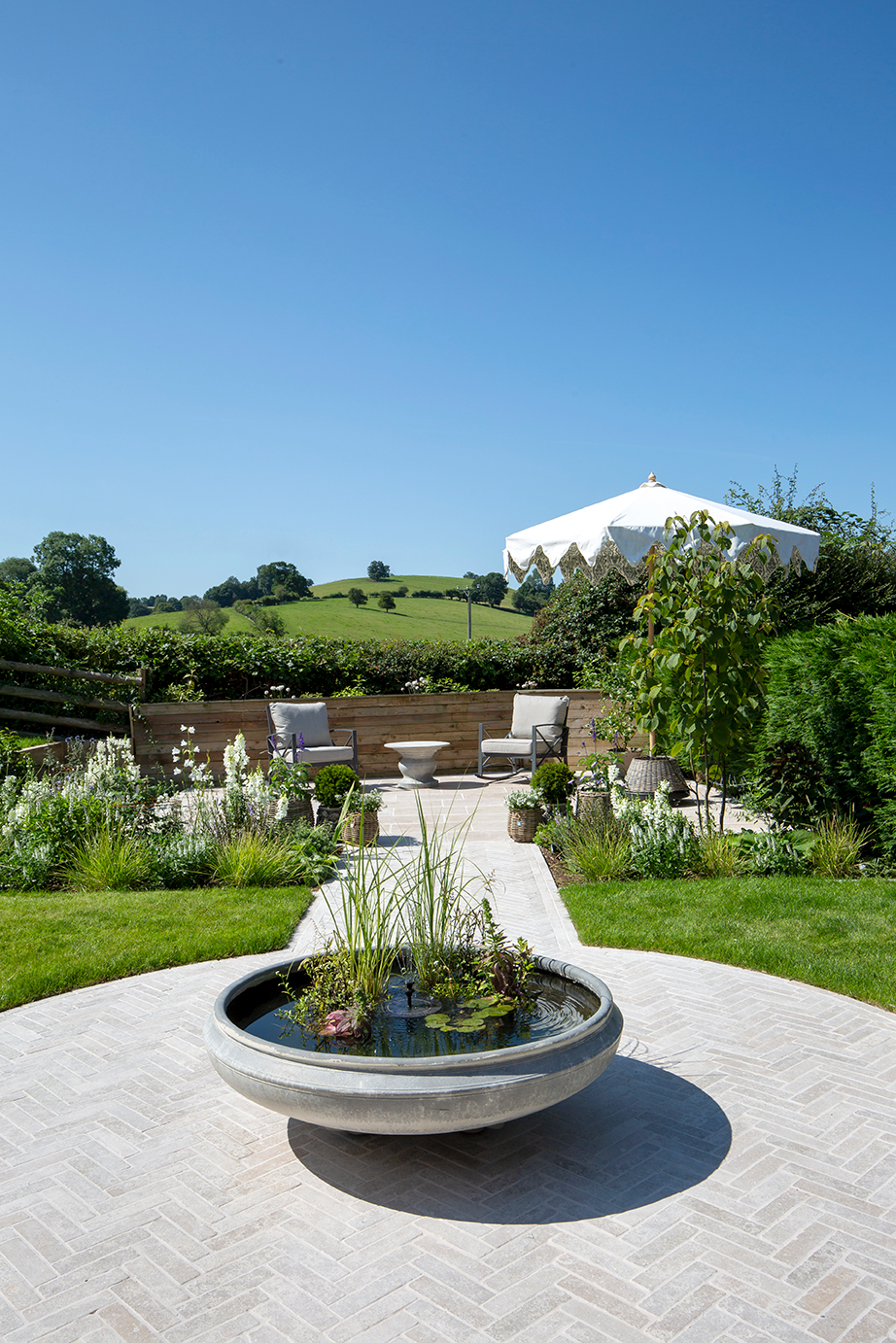
Laying natural stone in a herringbone pattern remains a popular way to add subtle character and charm to any garden or patio. The beauty of natural stone stackers or brick tiles is their versatility, they work well in different sized areas, from garden pathways to driveways. These smaller format pavers are a practical choice for garden zoning while the herringbone pattern is an on trend, decorative touch. The Dijon tumbled herringbone paving and Tuscany tumbled herringbone paving are classic natural stones to achieve this look.
Frequently Asked Questions
Is herringbone floor a good idea?
Absolutely! A herringbone floor is an elegant way to introduce character to your home. Its distinctive pattern naturally helps to draw the eye through a room, creating a subtle sense of movement and depth. It is a perfect way to add interest to your floor without it overpowering the room.
What is the rule for herringbone?
The beauty of the herringbone pattern lies in its symmetry and precision. Traditionally the tiles are laid at a 90-degree angle to create the classic ‘V’ shape. We would recommend starting the pattern from the centre of the space and working outwards, this helps to ensure the layout feels balanced. If your tiles feature any tonal variation, choosing different shades across the floor will ensure a natural and seamless blend of tones.
Is herringbone flooring more expensive to lay?
Laying a herringbone floor requires more time and skill than a standard pattern, which can often mean a higher fitting cost. The intricate pattern will require a skilled installer, especially when working with natural stone. That said, its timeless appeal makes it a truly worthwhile investment.
What is the best type of herringbone flooring?
The area you are looking to renovate, and your personal style will help to determine the best herringbone floor for you. Herringbone will effortlessly complement every home, from cosy cottages to contemporary homes. Making it a perfect choice for many with its timeless pattern that adds subtle character and warmth.
-
We hope you have found this Herringbone flooring ideas post inspiring for your own home! If you are wanting more inspiration, read our blog on everything to know about herringbone tiles. We invite you to visit one of our UK showrooms for large floor and wall displays as well as individual tiles and samples of our herringbone tiles. Alternatively, please feel free to contact us for any questions or advice!


